Bourke, Patrick Martin Austin (1913–95), meteorologist and historian, was born 10 May 1913 in Dungarvan, Co. Waterford, second son of Patrick M. Bourke, stationmaster, and Clare Bourke (née O’Sullivan). He was educated at Mount Sion CBS, Waterford, and UCC, where he was (among other activities) president of the Student’s Union and editor of the student newspaper; he graduated B.Sc. (1933) in mathematical science, winning the Peel memorial prize for outstanding student of the year, and M.Sc. (1937) from NUI. [From the opening paragraph of Bourke’s entry in the Dictionary of Irish Biography]
The “other activities” included a significant contribution to chess, as detailed in the Cork Examiner on the 5th December 1933. He had
infused a wonderful enthusiasm for the Chess Club, which has now got quite a large membership. Each afternoon one may see the chess enthusiasts crouching over the boards, engrossed in the game.
Representing Cork
The first reference I could find for Austin Bourke being engaged with the wider Cork chess community is when he was selected to play in a match against Limerick. W.R. O’Shea in his Evening Echo chess column for Saturday 2nd December 1933 reported on the occasion.
The Cork team motored to Limerick on Wednesday [29th November], where they were right royally entertained by their hosts. The Cork combination was the strongest ever visiting North Munster, whilst Limerick opposed with a new team, comparatively speaking. A most enjoyable evening was spent, every player being evenly matched, as evidenced by the protracted games. Following the dinner, the matches were played, and resulted as follows:-

Bourke was again selected for a return match between the two main chess centres in Munster a few months later, and was again victorious in his individual game. The Evening Echo chess column carried a report on the match (and another significant happening) on Saturday 10th March 1934.
The biggest chess tournament which ever took place in Cork occurred on Thursday evening, when Cork met Limerick at the Pavilion Café with a team of seventeen players a side and resulted in Cork being victorious. The following is the scoring:-

Cork fielded a most powerful team, which accounts for the better scoring on their side, but none the less commendable was the gallant manner in which Limerick accepted defeat.
Between the first and second matches, the Limerick board 1 in both, James Creevey, had won the Irish Championship by defeating the holder of the title, John J. O’Hanlon in a match. The occasion also doubled as a supper and presentation to the new Champion.
The presentation took the form of a solid oak Chess Table, the contrasting colours of the playing section being light oak and walnut and was a beautiful example of Irish workmanship. In making the presentation. Mr. W.J.L. O’Connell. M.E., Captain of the Cork Chess Club, said it gave him great pleasure, on behalf of all the chess players in Munster who were there that night, and the many who were absent, and on behalf of all the chess clubs in the South to show the esteem and affection in which Mr. Creevey was held amongst them, by making him this presentation. Mr. O’Connell congratulated Mr. Creevey on the great distinction he had achieved in winning the chess championship of Ireland, and all were very proud of him, and hoped he may long enjoy the honour he so deservedly won and fought so hard for.
Mr. Creevey then replied, thanking all his chess friends in Munster for their magnificent present, which came as a complete surprise to him, as he knew nothing about it. He was deeply grateful. The presentation would be a lasting souvenir of the many happy days he had spent in the company of the Cork and Limerick Chess Clubs.
Munster Championship
On Saturday 17th February 1934, the Evening Echo chess column had brought news of a potentially highly significant development for Munster chess.
MUNSTER CHAMPIONSHIP – AND A CHALLENGE!
So far there has never been a Chess Champion of Munster, although Leinster and Ulster always have had one. The National Championship, of course, comes first, then the provinces follow, succeeded by the cities, and lastly come the champions of the local clubs, each being the stepping-stone to the other. Limerick have put forward a suggestion and very appropriate, too — that the Chess Championship of Munster should be decided. They have accordingly issued a challenge, and are putting forward Mr. Robert O’Dea as their representative, and are asking Cork to respond. There should not be much difficulty in answering the challenge. The procedure is simple. The winner of the first three games (draws to count) is usually declared the victor. Using a clock, play is at the rate of 20 moves per hour, and this eliminates unnecessary slowness, and ensures that a game does not so beyond the first sitting. Considering the short distance between both cities, the arranging of suitable days would be a comparatively easy matter.
Meanwhile Austin Bourke had been competing in the Cork Chess Club Championship and his victory in that tournament brought him into contention for the mooted Munster title. W.R. O’Shea takes up the story in his Saturday 19th May 1934 chess column.
NEW CHESS CHAMPION.
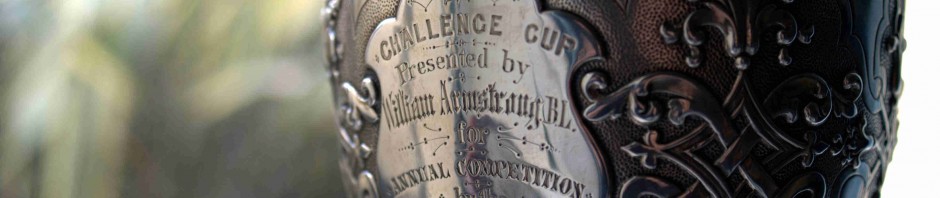
The tournament for the championship of the Cork Chess Club has once again been brought to a successful conclusion. Being a contest open to every member of the Club, each competitor had a wide variety of play to try his strength and tax his chess knowledge. As in all tournaments where an important title is at stake, the games were played in a hard fought manner, and there were some surprising wins and defeats, out of which emerged victorious Mr. Austin Bourke, B.Sc., of the University College, Cork. At the Pavilion Café, Cork, on Friday evening last Mr. Bourke received the trophy commemorating his win. In presenting it, Mr. J. Creevey, Chairman of the Cork Chess Club, and Chess Champion of Ireland, said that it gave him great pleasure to hand over to Mr. Bourke a souvenir of recognition of his achievements during the past session, and hoped that he may long remain Chess Champion of the Cork Chess Club, a title he so meritoriously deserved. Mr. Bourke had also a second honour conferred upon him, being nominated by the Governing Body of Chess in Cork as the city’s representative to play the Limerick challenger. Mr. Robert O’Dea, for the Chess Championship of Munster. As soon as the details are arranged, the date of the match will be announced in these columns.
It did not take long to sort out the details, and on Saturday 9th June, O’Shea’s column carried a report on the start of the match,
CHESS CHAMPIONSHIP OF MUNSTER.
A schedule of Rules and Regulations having found mutual agreement by the parties of both sides, Cork’s representative, Mr. Austin Bourke, of the University College, Cork and chess champion of the Cork Chess Club, met Mr. Robert O’Dea, chess champion of Limerick, at the Literary Catholic Institute, Sarsfield Street, Limerick, on Thursday last, when play opened for this important title.
Mr. O’Dea won the toss and opened with P-K4, to which Black replied P-QB4 – SICILIAN DEFENCE – and along these lines the game proceeded until the 11th move, when Mr. Bourke effected a pawn capture which immediately decided the game. The game, however, was played to a finish, Mr. Bourke winning in 46 moves.
In the second game Mr. Bourke had White and opened with P-Q4, and play took the normal course of the Queen’s Gambit Declined.
By far the better of the two games, this game was splendidly contested by both players, and it was just as exciting to be an onlooker as one of the players. White Castled on the Queen’s and Black on the King’s side and each has an opposite attack with the centre intact. Upon the 20th move the game was adjourned until Thursday evening, 14th inst., when played will be resumed at the Pavilion Café, Patrick Street, Cork, between 5 pm and 11 pm. Anyone interested is welcome and onlookers are assured of something interesting in Chess. The winner of the first two games is declared the champion.
At this exciting moment, with the prospect of a report on the further progress of the match in the Evening Echo chess column for Saturday 16th June, there was instead an announcement in the newspaper that the chess column was discontinued “during the summer months.”
There was, however, a brief paragraph in the Evening Echo for Friday 15th June on the Munster Championship. Unfortunately, that paragraph (or, at least the copy I studied) is partially faded and illegible – however, the final sentence can be read and states that “Mr. Bourke has therefore won the Championship“. The brevity of the paragraph suggests that the adjourned second game had been lost by O’Dea and Bourke had thereby won the two games necessary for the title.
Lilienthal simultaneous game
In Lilienthal in Dublin we have previously reported on Lilienthal’s simultaneous display, including a game won by Barry Galvin against the simul-giver. Austin Bourke was also successful against Lilienthal in a complicated game with opposite-side castling.
Andor Lilienthal – Austin Bourke
Simultaneous Exhibition, Dublin, 8 January 1935
1.d4 Nf6 2.c4 e6 3.Nc3 d5 4.Bg5 Nbd7 5.cxd5 exd5 6.e3
Not, of course, 6.Nxd5 Nxd5! 7.Bxd8 Bb4+! etc.
6…c6 7.Bd3 Be7 8.Nge2 h6 9.Bh4
Weak! 9.Bf4 seizes the open diagonal and gives White the advantage.
9…0-0 10.Qc2 Re8 11.0-0-0 b5
Brinkmann’s suggestion. Black counters White’s strong King-side attack by a demonstration on the Queen’s wing.
12.g4

12…Qb6
Better was 12…Nxg4 which can be played with perfect safety. If, however, White had played his Bishop as suggested to f4 on the 9th move, as pointed out in the earlier note, …Nxg4 would be answered by 13.Nxd5! exd5 14.Bc7! winning the Black Queen.
13.g5 hxg5 14.Bxg5 a5 15.Rhg1 a4 16.Nf4 Qa5 17.Bh6 Bf8 18.Rg2
18.Rg3 was better.
18…Kh8 19.Bg5 b4 20.Rg3

20…Nc5
Probably making unnecessary complications After 20…bxc3 White has nothing better than a perpetual check by 21.Rh3+ and Bh7+. After the text which prevents Rh3+ White could have obtained a good position by 21.dxc5 bxc3 22.Bxf6!
21.Bf5 Bxf5 22.Qxf5 Ncd7 23.Bxf6 Nxf6 24.Rh3+ Kg8 25.Nh5 Nxh5 26.Qxh5 f6
And White’s attack has been beaten off.
27.Ne2 Qa6 28.Nf4
The entry of the Black Queen at c4 cannot be prevented, but White’s move is not the best. 28.Kd2 was better.
28…Qc4+ 29.Kd2
Forced. If 29.Kb1 b3! If then 30.axb3 axb3 31.Rc1 Ra1+ and mate next move.
29…b3 30.a3
Again forced. If 30.axb3 Bb4# mate.
30…Qc2+
Besides winning the Queens-side Pawns it renders the Queen’s Rook inactive.
31.Ke1 Qxb2

32.Qh7+
Lilienthal misses his chance. The correct move was 32.Nxd5! (If then 32…cxd5 33.Qxd5+ Re6 34.Qxe6 mate!) After 32. Nxd5 he threatens, that is, of course, if Black does not take the Knight 33.Nxf6+! gxf6 (forced) 34.Qh7 mate.
Black cannot play 32…Be7 on account of 33.Nxe7+ Rxe7 34.Qh8+ winning the Black Rook.
Black’s best reply is 32…Re6 and White still has a fighting chance.
[RR 32…Qc2 covers the h7 square. After 33.Nxf6+ gxf6 34.Qh8+ Kf7 35.Rh7+ Ke6 36.Qg8+ and it seems that the game probably should end in perpetual check after 36…Kd6 (Definitely not 36…Kf5 37.Rh5+ Ke4 38.Qg4 mate) 37.Qg3+ Kd5 38.Qg8+ Kd6 39.Qg3+]
32…Kf7 33.Qg6+ Ke7 34.Qf5 Kd6 35.Rh8
A pointless excursion.
35…Qxa3 36.Nd3 Kc7
Threatening to win White’s Rook by Bb4+! White has no attack and Black has two strong Pawns extra. After some more play Black won. 0-1
[Click here to replay the game]
Intervarsity Match
This section was edited on 26 September 2025 to clear up a confusion about the date of this match.
A University College Cork team travelled to Dublin to play a five-board match against Trinity College Dublin (Dublin University). A report on the match in the Cork Examiner for Monday 18th February 1935 stated it had been played on the Saturday night, which would have been the 16th. However when the game below was published it was stated that the game had been played on the 17th February.
The Cork players scored three wins, one draw and one loss, with Bourke securing a quick win against the Dublin top board. Hopefully the latter’s attention was not drawn to the rather acerbic annotations, probably by O’Shea, in the Evening Echo.
Austin Bourke- J. Mortimer (Board 1)
Trinity -v- U.C.C., Dublin, either 16 or 17 February 1935
[Source: (Cork) Evening Echo, 16 March 1935, page 6]
1.e4 Nf6 2.Nc3 d6
A very slow treatment of Alekhine’s Defence. 2…d5 is more in the spirit of the Opening, which now is converted into a Philidor.
3.d4 Nbd7 4.Nf3 e5
We now have the Hanham variation of the Philidor Defence, much favoured by the Hypermoderns. All very good Nimzowitsch!
5.Bc4 g6
But this is just bad Mortimer! There is no time to develop the Bishop on this wing. 5…Be7 is correct. Now Black’s game is lost.
6.Ng5

6…Qe7
6…d5 is the only move to save the Queen, but even that, of course, would not save Black’s game. The text move has the merit of losing quickly.
7.Bxf7+ Kd8 8.Ne6+ Qxe6 9.Bxe6 1-0
Plunkett Trophy
Austin Bourke further burnished his growing reputation with his performance against a very strong field in Cork’s most prestigious competition. The chess column of the Evening Echo for Saturday 20th April 1935 contained a report on the concluding stages of the season-long Individual Championship of Cork.
This season’s tournament for the Plunkett Trophy has just been brought to a successful conclusion. Eleven competitors entered, and the tournament was spread over a period of five months, in which some exciting games were played. This tournament is by far the most important chess event of the season, as it is the yearly contest for the Chess Championship of Cork, which was inaugurated in the year 1907 and perpetuated by the trophy presented by the late Sir Horace Plunkett. K.C.V.O. During the progress of the tournament there were some surprising wins and losses. Perhaps the greatest individual achievement was by Archer, who lost only one game – to O’Leary. O’Leary, himself an ex-champion, put up a capital performance by defeating in turn Archer, O’Connell, Bourke and Madden, and drawing with Whittaker, which was a splendid succession of victories, but they were marred by a dreadful loss to Good, which is the only reason why his name does not appear among the first. The last stages saw a very close struggle for top place between Archer, O’Leary, Bourke and Madden, so much so that several of their games had to go for adjudication, upon the results of which the final figures depended. In this respect, Mr. Creevey acted as an impartial judge, and gave the following decisions:— Archer v. Bourke, draw; O’Leary v. Whittaker, draw; Madden v. Bourke, win for Bourke; Madden v. Whittaker, draw. The following are the final results:—
R. Archer and A. Bourke tie for first place with 6½ points each (joint winners of the Plunkett Trophy);- C. O’Leary and M. Madden, tie for third and fourth places with 5½ points each; B.St.J. Galvin, W.J.L. O’Connell and W.R. O’Shea tie for fifth, sixth and seventh places with 4½ points each; W. G. Whittaker, eighth place with 3½ points; John Good, ninth place with 3 points; J. MacEvoy, tenth place with 1 point; S. Spillane resigned.
Mr. Archer is an old and leading member of the C.Y.M.S. Chess Club, and his varied successes in Chess have placed him in the front rank of tournament players in Cork. He is one of the greatest chess players that Cork has produced, and one cannot help admiring how, year after year, he manages to come out on top. During the long course of years that he has been associated with the C.Y.M.S., whose interests he always has at heart, he has held the lists against allcomers. It is only on very rare occasions that he has lost, and these wins have usually been the result of supreme effort on the part of his opponent ….
Mr. Bourke, on the other hand, is a prominent member of the University Chess Club, who in a short space of time, has achieved quite a reputation for himself as a chess player of a high standard. He has done much to promote the theoretical study of chess in Cork, and is himself a noted theorist.
The Evening Echo chess column had previously reported (Saturday 23rd March 1935) upon one of those rare Richard Archer’s defeats, on board one of a Club Match.
COPEMAN CUP
The University Chess Club met the C.Y.M.S. Club at the Pavilion Café on Wednesday night … and on the adjournment at 11 o’clock both sides had recorded a win each. Friday night being set apart to play off the unfinished games. Perhaps the greatest sensation of the evening was the defeat of the champion, R. Archer, by the 21-years-old Austin Bourke.
Very interesting information, thank you
Pingback: More games from Lilienthal’s 1935 Dublin simul | IRLchess