An Tóstal 1955

Last year Tony Foley gave extensive coverage of An Tóstal 1955, the first international tournament ever held in Cork, in a series of posts (parts I, II, III, IV, V and VI), based on reports in the Evening Echo and the Examiner.
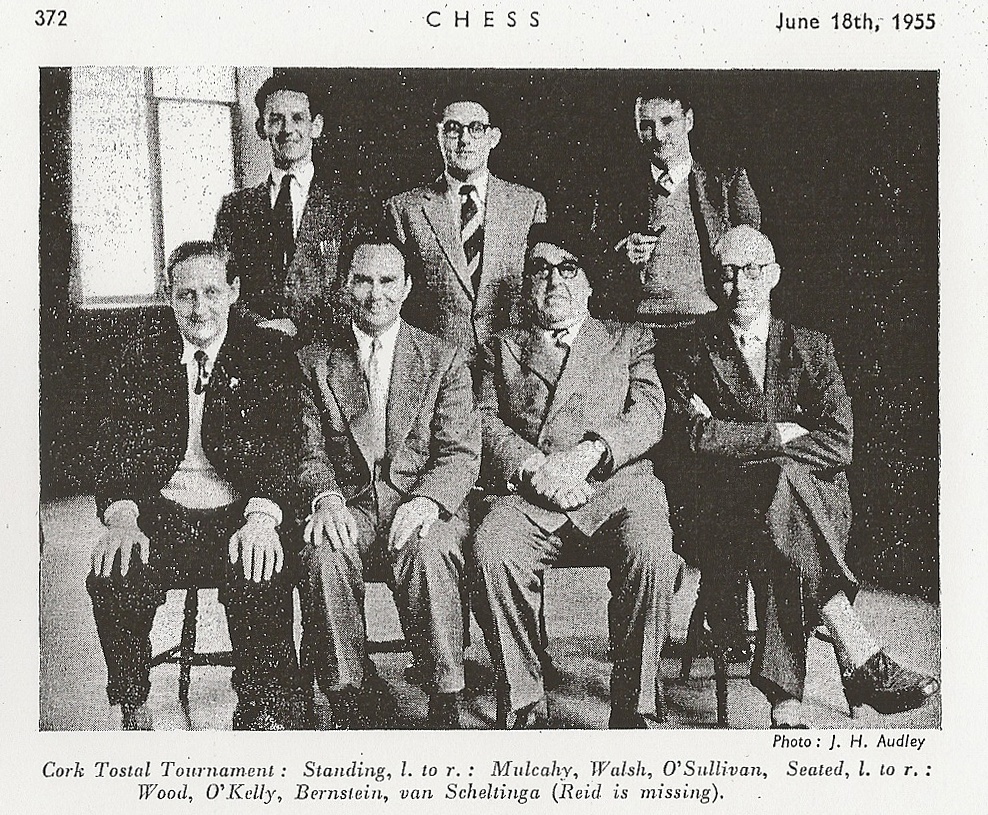
An Tostal, Cork 1955: 7 of the 8 competitors

It’s hard to add much to that, but here’s a photo of the participants, from CHESS (Sutton Coldfield). Of the Irish participants, Noel Mulcahy was Irish champion in 1953, Dónal O’Sullivan in 1948, 1956, and 1957, and John Reid in 1961 and 1962 (joint). J.J. Walsh’s chess column in the Irish Times was just starting.

The tournament winner, Albéric O’Kelly de Galway from Brussels, 1911-1980, was one of the initial set of IMs in 1950 and became a GM in 1956, and he won the 3rd World Correspondence Chess Championship (1959-1962). T. D. (Theo) van Scheltinga from Amsterdam, 1914-1994, was also one of the initial batch of IMs in 1950, and had been Euwe’s second during the 1948 world championship match-tournament. B. H. Wood, 1909-1989, was best known as the founder of CHESS magazine, editing it from 1936 to 1988. Ossip Bernstein was born in the Russian Empire in 1882, competed in several major international tournaments before the First World War, including St. Petersburg 1914, disappearing completely from the scene between the wars, before returning at Groningen 1946. He was on the initial list of GMs in 1950.

At a time when titles were much rarer than they are now, An Tóstal 1955 had an impressive lineup!

A final question some of you may have is what “An Tóstal” translates as. The answer is … nothing, apparently nothing at all.
Posted in Tournaments | Leave a comment

Stop press!

It isn’t often that Irish chess history makes the front page of the Irish Times, but we live in strange times indeed: today’s paper has a story, by Joanne Hunt, Game finally over after 50 years for silver chess trophy.

It seems that the Irish Times Game of the Year Trophy had been dropped into Weirs on Grafton Street for engraving, in 1962, and never picked up. The last winner was Vincent Maher, Irish champion in 1950 and 1955, whom the paper tracked down to Stockport, England, where he’s a retired GP. According to the story, he’s still playing chess, though not competitively.

The ICU archive has many games of his, but none from 1962. J.J. Walsh’s manuscript has several more, but again none from 1962. Does anyone have the winning game, or any others from that Irish Times series?

Posted in News | Leave a comment

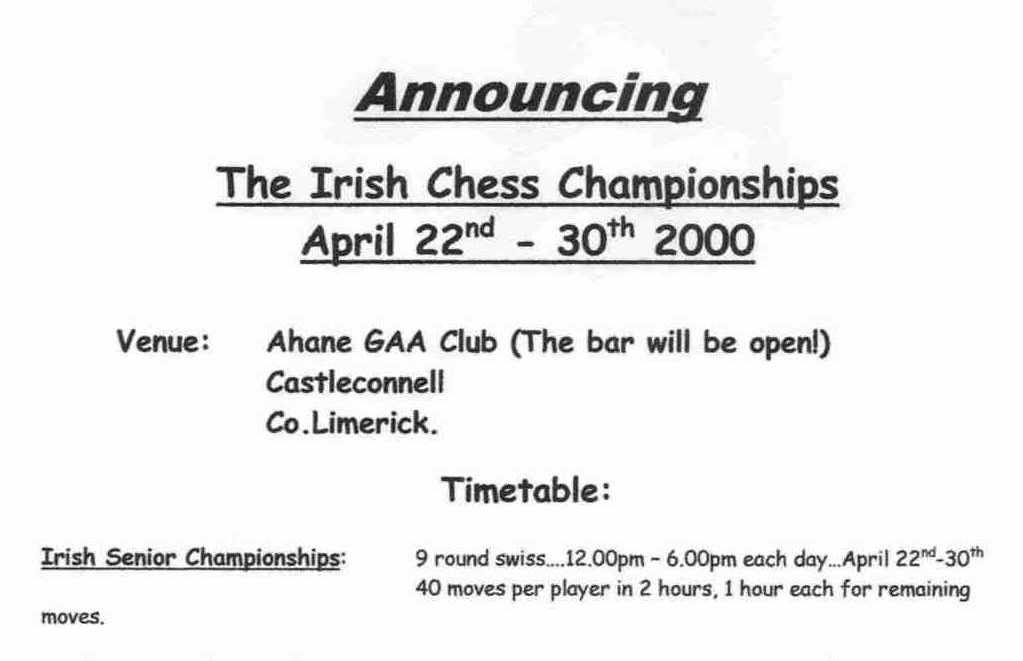
Irish championship 2000, Castleconnell, Co. Limerick

Irish Ch 2000 flyer header

To this day the topic of where to hold Irish championships is hotly debated, with a division between those who say choosing Dublin all the time is monotonous and unfair to non-Dublin players, and those who say that non-Dublin venues result in much smaller tournaments. The 2000 championship, held in the “scenic village” of Castleconnell, Co. Limerick (Wikipedia’s description) could be cited by both sides: it had a very small field of 12, tying the record low for a Swiss-format championship, but on the other hand the field was strong enough and the championship came down to a race between two players who had never won, Mark Heidenfeld finally shaking off Gavin Wall in the last round.

A report is up on the tournaments page: all 53 games (though at least one seems to be incomplete).

Posted in Irish championships, Tournaments | Leave a comment

Ciarán O’Hare earns correspondence chess Senior International Master title

Ciarán O’Hare used to play over-the-board chess in Ireland in the late 1970’s: for example he played in the 1979 and 1980 Irish championships. He moved to the US at some point, a long time ago I think, and is now a surgeon in Oklahoma. For time reasons he switched to correspondence chess, where he has had great success, winning the US Absolute Championship in 2008, and just recently adding to this the correspondence chess Senior International Master title. (In correspondence chess, there are IM and GM titles as in the over-the-board game, but there’s an extra Senior International Master title that ranks between the two.) He becomes Ireland’s 7th CC SIM. Congratulations!

The November 2011 issue of the column The Check is in the Mail, from the online edition of Chess Life, features an annotation by Ciarán of the game that gave him the draw he needed to clinch the title, in which he was defending a pawn down.

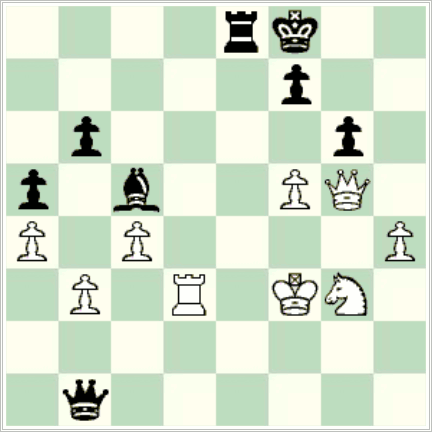
Hlinka - O'Hare, corr 2009Vasil Hlinka – Ciarán O’Hare
Chessfriends Rochade (corr) 2009      [B84]

1.e4 c5 2.Nf3 d6 3.d4 cxd4 4.Nxd4 Nf6 5.Nc3 a6 6.Be3 e6 7.Be2 Qc7 8.a4 b6 9.f4 Bb7 10.Bf3 Nbd7 11.Qe2 Be7 12.g4 Nc5 13.Qg2 d5 14.exd5 exd5 15.Nxd5 Nxd5 16.Bxd5 Bxd5 17.Qxd5 Bh4+ 18.Ke2 O-O 19.Qc6 Qa7 20.Rhd1 Rfe8 21.Nf5 Rac8 22.Qf3 Be7 23.Kf1 Bf8 24.Kg2 Qc7 25.Bxc5 Qxc5 26.c3 g6 27.Nd4 Qc7 28.Rd3 Re7 29.Rf1 Rce8 30.Rf2 Re4 31.b3 Bc5 32.Re2 Rxe2+ 33.Nxe2 Qe7 34.Ng3 Qe6 35.c4 Qe7 36.g5 a5 37.h4 h6 38.Qg4 hxg5 39.Qxg5 Kf8 40.Qh6+ Kg8 41.Qg5 Kf8 42.Kf3 Qe1 43.f5 Qb1 (diagram) 44.Qh6+ Kg8 45.Qd2 Qg1 46.fxg6 fxg6 47.Kg4 Re3 48.Rxe3 Bxe3 49.Qd5+ Kg7 50.Qb7+ Kf6 51.Qf3+ Kg7 52.Kh3 Bf2 53.Ne2 Qe1 54.Qc3+ Qxc3+ 55.Nxc3 Kf7 56.Kg4 Ke6 57.Ne4 Bc5
½-½
(Click to replay the unannotated game.)

Posted in Players | 1 Comment

Monthly roundup: Branagan Cup, TWIC update, Irish Championship 2011, Simuls

Happy New Year all!

Here’s a summary of some new items over the past month, that were not the subject of posts.

Branagan Cup
Up to now the “Leagues” tab here has been completely empty. The plan has always been to include all team events in the scope, and inspired by Seán Terry’s stirring account of the 1977 final, I started looking at records of the Branagan Cup. I’m not sure why it is, but records are very scarce on this competition, even up to this year’s event. A new Branagan Cup page has been added, with winners in 13 years, plus sporadic other information on matches and winning teams. I think this competition was run for the first time in 1973 (to be confirmed) so about 1/3 of the winners are known.

TWIC update
I had skipped updating TWIC for a couple of weeks. The Games page has been updated with the Irish games from TWICs 892, 893, and 894: 51 new games. The full archive from TWIC 829 onwards now has 949 games from 71 players, and a new players and game totals page has been added.

The games from the e2e4 Gatwick International in late October were held back from TWIC to avoid compromising the chances of some competitors in the World Youth Championships in Brazil (see David McAlister’s comment). However, though that tournament is long over and the games have appeared on e2e4’s site, they haven’t appeared in TWIC. Maybe when you lose your place the games never appear there?

Irish championship 2011
The plan at IRLchess is to keep updating tournament reports as new information arrives. With the release of the December issue of the Irish Chess Journal, it became possible to provide links to the August issue, which contains several interesting annotations, in particular Peter Cafolla’s account of his first-round game against Philip Short. Also I found on the Atticus C.C. web site an annotation by John Redmond of his pythonesque squeezing of Jonathan O’Connor. These changes along with a few others have been rolled in to version 1.2 of the tournament report.

Simuls
Last months the Local Simuls page had just started, with just one simul listed. Seven more have been added (of which one is a blindfold simul!) and on the Simuls page, details of Ray Keene’s 1977 simuls have been added. It seems the fashion was to have enormous simuls back then (1970’s), with Keene encountering 53, 54, and 41 on three consecutive days, and Botterill taking on 44 two years later, whereas these days it’s rare to see anyone try much more than 20. Is this by choice of the simul-giver or because of a fall-off in player numbers?

Posted in Administrative | Leave a comment

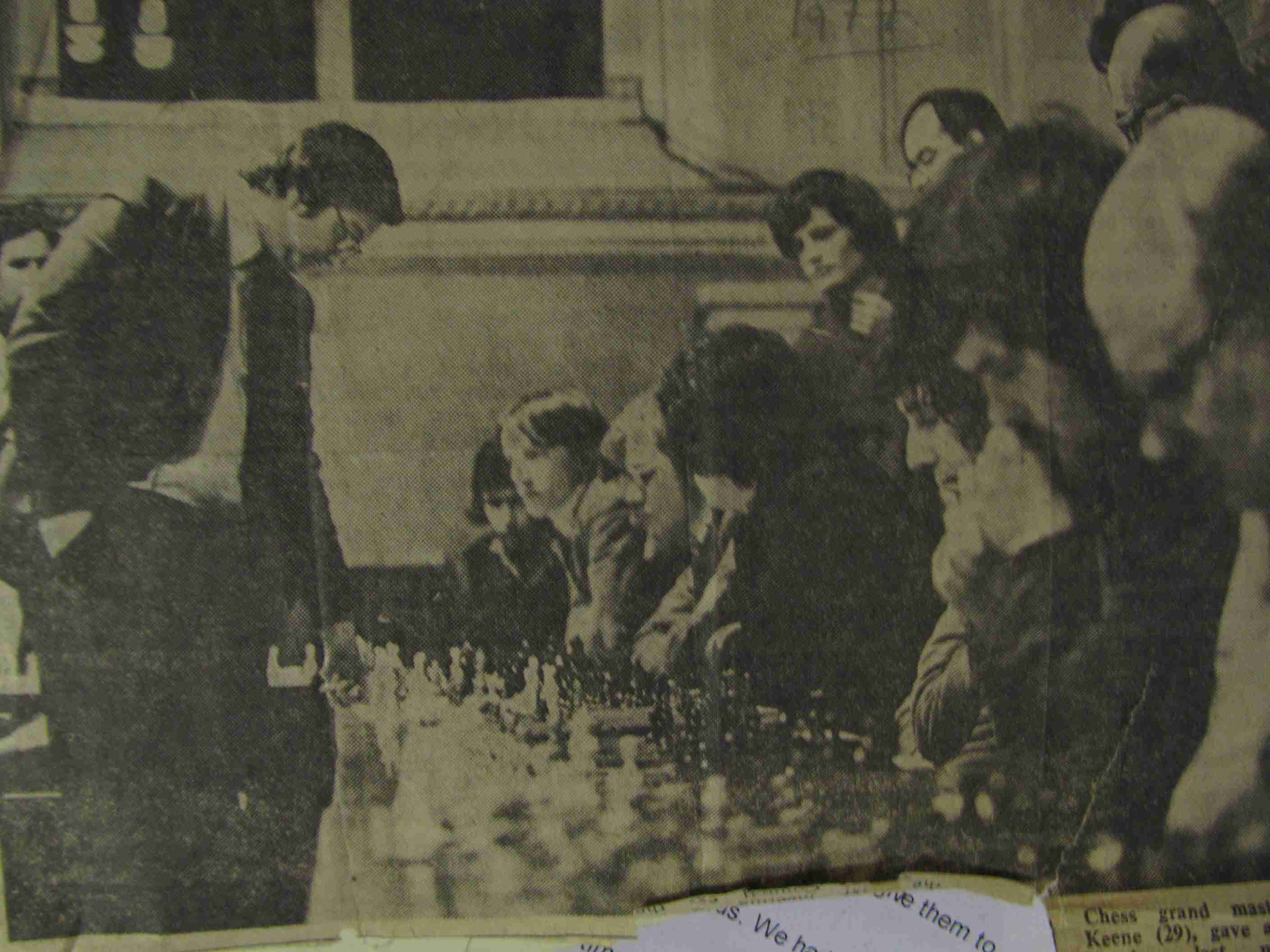
Ray Keene simul, Trinity 1977

From a 1977 clipping supplied by Seán Terry: “Chess grand master Ray Keene (29) gave a demonstration last night at Trinity College, Dublin, where it had been arranged that he would play simultaneously against 50 competitors. The exhibition was organised by the Dublin University Chess Club and sponsored by Trinity Trust. Keene, who is the second British grand master, is pictured studying a move by one of his opponents, who all paid £1 a head for the privilege of playing against the chess supremo.”

Ray Keene simul, Trinity 1977

And now how many of the faces in the photo can be identified? Tim Harding, who had moved to Ireland a few months earlier, is one of the spectators. Seán Terry identifies the player second from the end, turned towards the camera, as Adrian Hill, and the player next in line (blond hair, glasses) as Noel McCaffrey, then secretary of the Dublin University C.C. Any suggestions for the others?

Full results of the simul are unknown (or let’s say remain to be tracked down, as they must be available somewhere), but Keene had at least one very fortunate escape, Seán Terry completely letting him off the hook in their game.

Posted in Games, Players, Simuls | 1 Comment

DisinformatorTM

With excellent timing, two magazines have produced a new issue this week, just in time for the Christmas stocking. The first is of course Tony Foley’s Irish Chess Journal. The second, which may not be familiar to Irish readers, is DisinformatorTM, the club magazine of Oxford City C.C., edited by Seán Terry. I came across it for the first time earlier this year, but it has been going since early 1995, now up to issue 41. It’s a substantial magazine that captures very well the atmosphere of club chess, with the subjects of blunders and swindles always hovering in the background, along with what to do when you don’t know any theory, and so on and so forth. Many, many games and all very entertaining.

As I was reading through the back issues, I started to say to myself, “Hmm, this fellow seems to know quite a lot about Irish chess”, with various mentions of the Armstrong, Irish players and clubs, etc. But it still came as a complete shock when I found the game Coffey-Terry from the Armstrong Cup in 1982. My subconscious must have started working on forgetting as soon as the scoresheets were signed, and clearly met with great success as I have no memory whatsoever of this game. It was in issue … well, it doesn’t really matter what issue it was in, the important point is that Seán Terry turns out to be from Ireland, and a veteran of Dublin C.C.

From Disinformator 6 (with permission, for which thanks), and very slightly adapted, here’s an account of the final of the 1977 Branagan Cup, Dublin v. Dundrum, played on the 14th March 1977 in Dublin C.C.’s (excellent) club rooms at 20 Lincoln Place. It comes up in a discussion of blunders and their causes, where he’s discussing various examples of where you forget that later on in an analysis, a piece currently occupying a square will no longer be there. (I used to call these “ghosts”.)

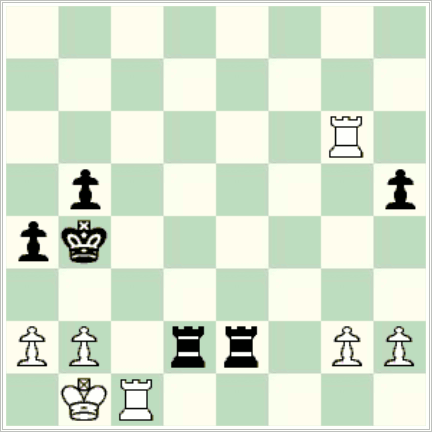
Terry - Frain, Branagan Cup final 1977, final position“Playing for Dublin C.C. in the final of the Branagan (knock-out cup) in 1977, I reached the diagrammed position, by which time (a) I was in terrible time trouble and stressed; (b) I had to win, as otherwise the match would be lost on board count. Black had just played Rd1-d2, threatening mate in two, and offered a draw. Notwithstanding the fact that I could see the following (fairly obvious) variations, I accepted!! 37. a3+ Ka5 (37. … Kb3 38. Rc3 mate) 38. Rcc6 b4 39. Rc5 mate, a point which was reinforced seconds later when an exodus of kibitzers descended to demonstrate the forced win.

What decided me against playing 37. a3, and accepting the draw, was not the variation above–I’m not that Irish–but the following analysis: 37. a3+ Ka5 38. Rcc6 Rxb2+ 39. Ka1(?) Ra2+ 40. Kb1 Rxa3, where Black escapes the mate and wins. Of course 39. Ka1 is a ??schlocker?? of a move, but I hadn’t realised that 39. Kc1 was possible: in my mind’s eye, it was still occupied by the rook. Stress had refused to erase the image from my brain. A convincing explanation to me, although my team-mates weren’t all that delighted at the time. [Nor, incidentally, was I. Sorry, JJ.]

Seán has also provided the full game score, for which thanks also: click to replay.

Posted in Branagan Cups, Games | 2 Comments

Did Diskin resign in a winning position?

The last post gave P. A. Duignan’s brilliancy prize win against P. Diskin in the 1949 Irish championship in Galway. But there’s a flaw! David McAlister spotted that Diskin may have been winning in the final position.

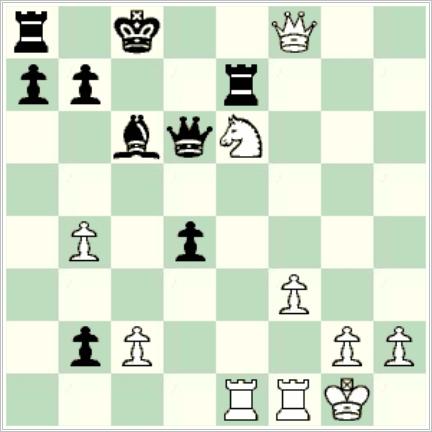
Duignan - Diskin, Irish Championship 1949White’s last move was 23. Qf7-f8+, and Black resigned. David points out that he should have played 23. … Be8!. Now the key line runs 24. Re4 (initially computers think this is winning, but …) Rxe6 25. Qxd6 Rxd6 26. Rxe8+ Kd7! 27. Rxa8 Ra6 28. Re1 Ra1 29. Rae8 Rc1 and wins.

The best chance for White seems to be 24. Qf5 b1=Q! 25. Nxd4+ Bd7 (25. … Kb8!?) 26. Qf8+ Kc7 27. Nb5+ Bxb5 28. Qxe7+ Qxe7 29. Rxe7+ Kd8 30. Rxb1 Kxe7, with three pawns for the bishop and some hope for survival, but surely Black must be winning here also.

(Click to replay.)

Posted in Connacht champions, Games, Irish champions, Players | Leave a comment

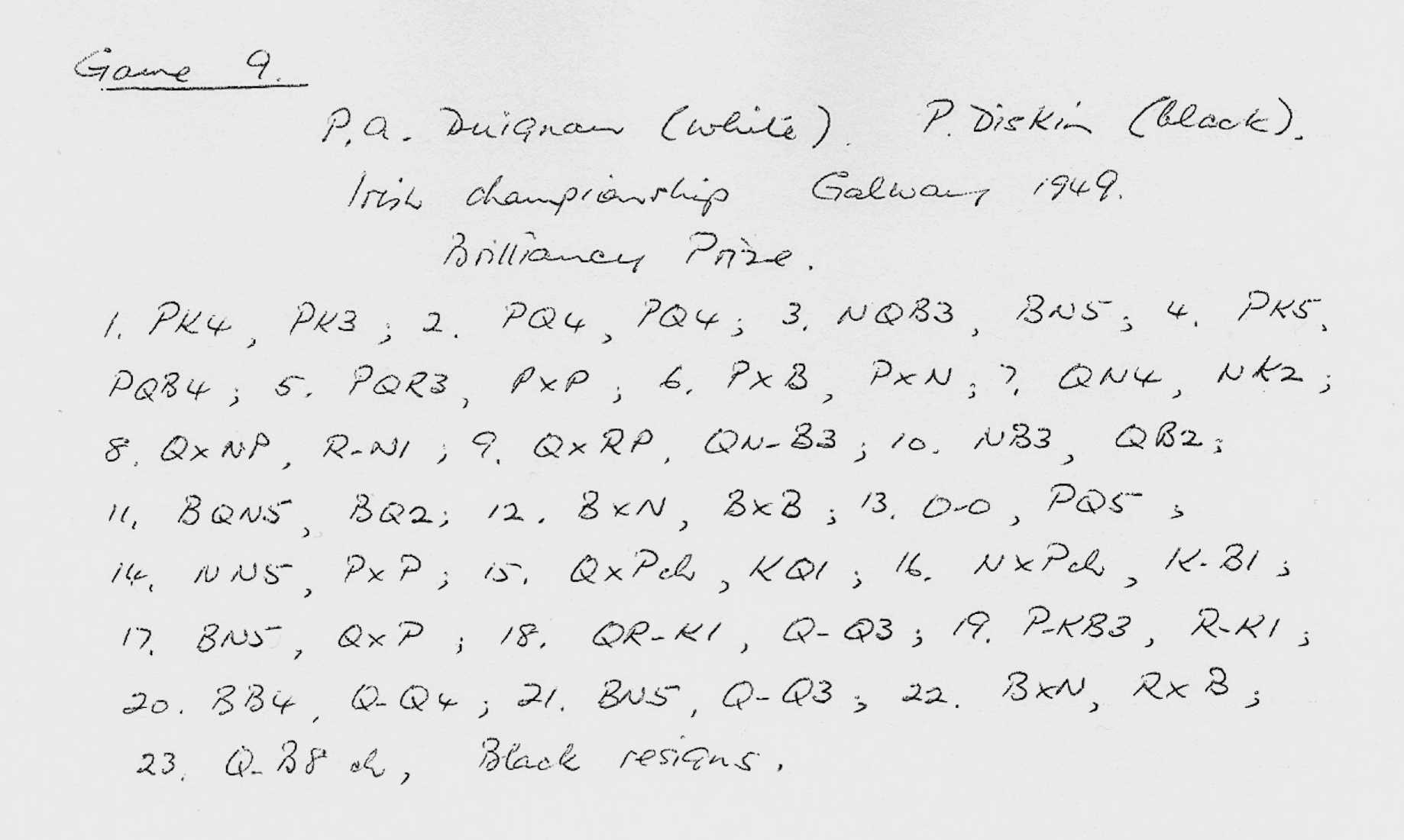
Duignan-Diskin, Irish championship, Galway 1949 (brilliancy prize)

Returning to , the next on the list is another win by P. A. (Paddy) Duignan, this time against P. Diskin in the 1949 Irish championship in Galway, winning the tournament brilliancy prize.

Manuscript score for Duignan-Diskin

P. Diskin of Galway was Connacht champion in 1950, 1951, 1954 and 1955, and his best result in an Irish championship was =5th in Cork 1951 (sources: the Connacht championships and Irish championship pages on David McAlister’s Irish Chess History website).

The 1949 championship in Galway was a 7-round, 16-player Swiss that resulted in a runaway 7/7 victory by 20-year-old P. B. (Paddy) Kennedy, 2½ points ahead of the field, for his only Irish championship win. It seems only the top 7 finishers are known, the others being 2nd-4th. Warwick Nash, George J. Boyd and Dónal J. O’Sullivan 4½; 5th-7th. John C. Hickey, J. J. O’Hanlon and R. Dundas 4. So no mention of either Duignan or Diskin. The game isn’t in the ICU games archive, which has all of Kennedy’s games but no others.

The game itself (click for playable version) featured a variation of the Winawer, 5. … cxd4?!, that even in 1949 was under a cloud, and 7. … Ne7? (instead of 7. … cxb2 or 7. … Kf8) further compounds Black’s problems. White misses the strongest continuation, 11. Ra3! with a clear advantage, and a complicated battle ensues.

Posted in Connacht champions, Games, Irish champions, Irish championships, Players | 1 Comment

Irish correspondence champions

Following up on the last two posts (blogging being a stream-of-consciousness matter), two of the unlucky almost-winners of the Irish championship had the consolation of winning the Irish correspondence championship.

W. J. Allen was chess editor of the Belfast News-Letter from 1911 to 1956. Around the time he missed out in the playoff for the 1926 Irish championship, he was embarking on an extended winning run of 6 Irish correspondence championships out of 7: 1926, 1927, 1928, 1929, 1930, and 1932.

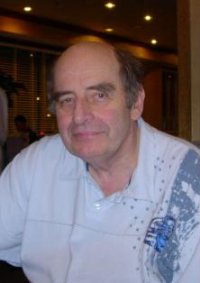
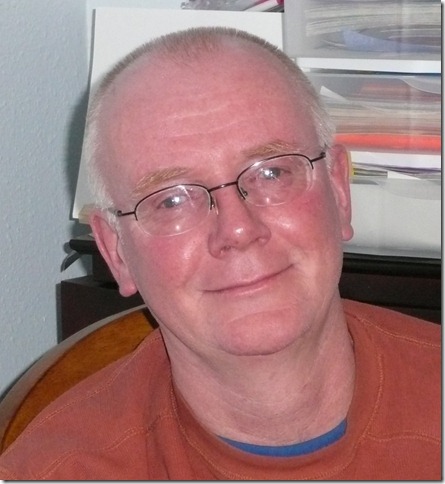
Alex MontwillAfter missing out on tie-break in the Irish championship in 1962, Alex Montwill was joint winner of the Irish correspondence championship in 1963. Although he seems to have given up chess a long time ago, we do have a recent photo (see right), based on a new book that came out last month: The Quantum Adventure: Does God Play Dice?.

There have also been three players who have won both the over-the-board and correspondence titles: John B. Reid, Tony Doyle, and A.T. Ludgate. There is an on-line correspondence roll of honour that is almost complete. (A complete list is in Correspondence Chess in Britain and Ireland, 1824-1987, by the 1996 Irish correspondence champion, Tim Harding.)

Posted in Irish champions, Players | Leave a comment