The third annual St. Andrew’s Charity Classic was held the weekend before last in Booterstown, Co. Dublin. The event attracted 130 players across 3 sections.
The Masters ended in a tie for first between Tarun Kanyamarala and Conor O’Donnell. A report (with all 42 games, via live boards) has been added to the Tournaments pages here.
A new page has been added here, listing Irish players in descending order of peak FIDE ratings, as published in official FIDE lists (and not accounting for intermediate or live ratings).
The page accounts for all FIDE lists up to and including September 2019, and will be updated as necessary every month.
[Update, September 17, 2019: the list has been modified to add John Redmond and John S. White.]
A new page has been added here on FIDE title norms achieved by Irish players (and by non-Irish players in events played in Ireland). The page also lists progress of Irish players towards titles.
Many thanks to John McMorrow, who pointed out several errors and omissions in an earlier draft of this page, as well as suggesting the idea for having such a page.
The City of Dublin Championships were held in Coláiste Éanna over the weekend, attracting 123 players over four sections.
In the Masters, Conor O’Donnell became champion for the first time, with 4½/5. Of the 32 games played, 29 were available on live boards, and they have been compiled into a report on the tournament pages here.
Sir Horace Plunkett kept detailed diaries over decades; they have been transcribed and are available online at the National Library of Ireland website. His diary for 1919 provides some background on Capablanca’s visit, and his stay at Plunkett’s house. The full entries for all the days on which Capablanca is mentioned are given below.
4 Dec, Thu
J R Capablanca the Chess Master (probably the world Champion though he has yet to meet Emmanuel [sic (Emanuel)] Lasker who is the titular champion – he would beat all others) arrived. The young Cuban, he is only 31, was interesting in his political views. He knows the outlines of the Irish Question & like the rest of the world blames England bitterly for not settling it. He played 40 in the Mansion House. He by an oversight lost his Queen & the game to one player (not a good one) won 27 and drew 12. I was among the drawers but they were all adjudicated. I had a draw only with the best play.
5 Dec, Fri
Had Capablanca on my hands but got through some work. Ld. ffrench turned up & I had him out for a walk & talk in the afternoon. We agreed that the Dominion idea is making way, but – well England is England & Ireland is Ireland. Played again in the simultaneous exhibition. This time I drew & the draw was distinctly in my favor.
6 Dec, Sat
Capablanca went to Killarney for weekend. Monteagle & Gerald Heard a relative of Mary Perceval (nee Massey). G.H. is a possible private secretary and I am getting him for a few days’ visit – I go next Thursday to London en route for U.S.A. – to see whether we might suit each other.
8 Dec, Mon
Got Heard to help me with some literary work & decided to take him on as private secretary.
Capablanca came back from Killarney & I got to like him.
Capablanca scored +27 =12 -1 and +37 =2 -1 in his two Dublin simuls, on December 4 and December 5, 1919, respectively. Shortly afterwards, he recorded his impressions of Irish chess, in a letter to the Irish Statesman:
‘Señor Capablanca on Irish Chess
To the Editor:
Sir – Your readers may perhaps be interested to know what I thought of the play during my visit to the Dublin chess clubs. I found much stronger opposition than I had any reason to anticipate. Some of my opponents’ play was very good – particularly once they obtained an advantage which would indicate facility for carrying on an attack, an excellent – and I am told – Irish quality. I have no doubt that some of my opponents would, with the proper kind of practice and a little study, become very strong players, and I hope most earnestly that they will persevere in their playing, as, taken as a whole, the qualities exhibited by my adversaries were of a high order. If I may be allowed to boost a little of my own work, I would advise those who think that they could learn something from my play to obtain a copy of my recent book, My Chess Career, published by Bell and Sons, London, where they will find notes and advice that may be valuable to them.
The “Privy Council” is in the headlines all of a sudden; though the link from this to Irish chess is a very slight one, it leads to a very interesting character in Irish chess, and indeed in Irish history.
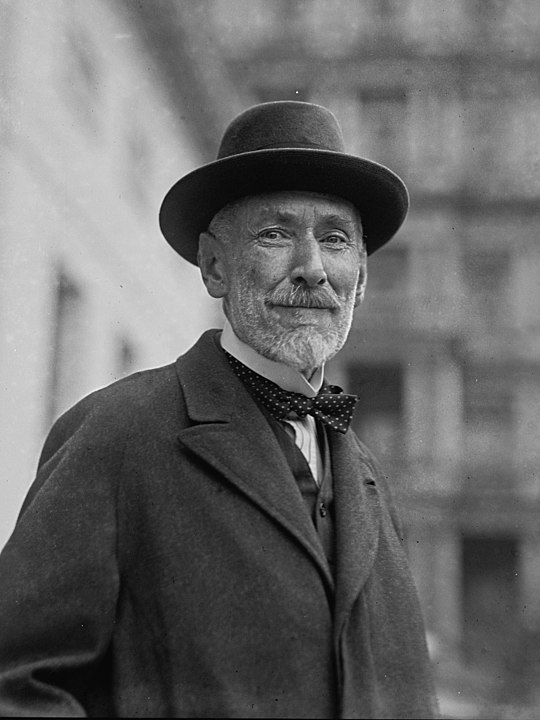
Sir Horace Curzon Plunkett (1854-1932) was an Anglo-Irish politician and agricultural reformer, who is most famous as a pioneer of the co-operative movement in Ireland. He was an MP for Dublin South from 1892-1900, and later a member of the first Seanad Éireann in 1922-23, among many other posts and activities in a long and energetic career. He became a Fellow of the Royal Society in 1902.
He was appointed to the Privy Council of Ireland in 1897; it seems this was distinct from but played a comparable role to the Privy Council of Great Britain. It seems it was never formally abolished but fell into disuse after 1922.
His active chess career seems to have been confined to his younger days. He played for Oxford versus Cambridge four times (the 2nd to the 5th such matches), and in the Lowenthal Cup tournament in London in 1885. He played board 1 for the House of Commons in the telegraph match versus the U.S. House of Representatives in 1897, winning his game. The Edo rating project places him around 2100 in the 1870’s and 1880’s.
He was the President of Dublin Chess Club from 1904-23, and seems to have played a relatively active role. His biggest contribution came 100 years ago, when Dublin C.C. was at a low ebb due to post-war depression, and the idea of inviting Capablanca came up.
“Sir Horace’s quick mind saw the possibilities at once. He jumped at the suggestion. … Sir Horace went to London and arranged matters. Capa. agreed to come to Dublin and give displays on December 4 and 5, for a fee of 12 guineas a display, plus travelling expenses. The displays, given at the Mansion House, were a great success. Capa. played 40 games each night … . Sir Horace took charge of the Master, and put him up at his own house … .”
—A. A. Luce, A History of Dublin Chess Club, ca. 1965, p. 24.
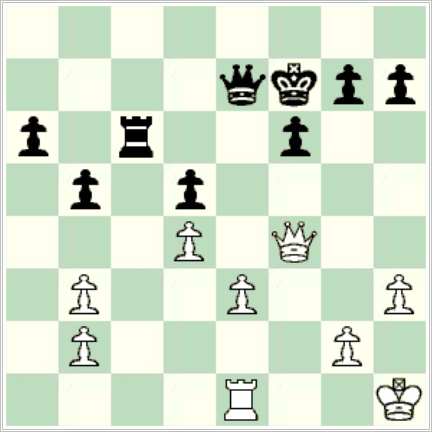
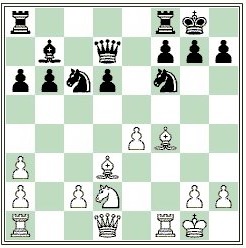
One of the games on the second evening was against Sir Horace himself. It was agreed drawn in the following position:
Capablanca – Plunkett, second simul, Dublin 1919
Final position (after 32. Re1)
Plunkett stands substantially better in the final position and could well have played on.
There is an excellent photograph of taken before the start of the first simul, featuring Plunkett, Capablanca, and the Lord Mayor of Dublin in the RTÉ Stills Library, which can’t be shown here for copyright reasons (search for Capablanca).
A norm event was held alongside the Glorney Gilbert events, held near Dundalk, in July.
The tournament was won by the young Icelandic player Vignir Vatnar Stéfansson, who recorded his first IM norm in the process. The event also resulted in a WIM norm for the even younger Irish player Trisha Kanyamarala. Congratulations to both players!
Well done also to the organisers, of course. While there are no guarantees in these matters, and it would always be unfair to blame the organisers if no norm resulted from such an event, they deserve some reflected credit when it all goes well.
The crucial game for the winner came on the last day, when he still needed 1½/2. In the morning game he had White against Darragh Moran. With a 400+ point rating advantage, he must have been confident, but as it happened he could have had to struggle to hold the game.
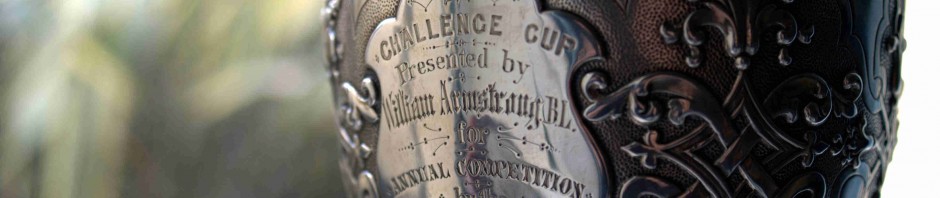
The Glorney Cup was held last month at Carrickdale Hotel and Spa, Co Louth, 71 years after the initial competition between schoolboy teams representing Ireland and England took place in Dublin on the 26th and 27th August 1948.
We have previously profiled Cecil Parker Glorney, the Dublin businessman and philathropist who had donated the eponymous Cup. At that time we reported that no games of his seemed to be available. Now, at long last, we have found one of his games (or rather the final stages of one) in the chess column of the Dublin Evening Herald.
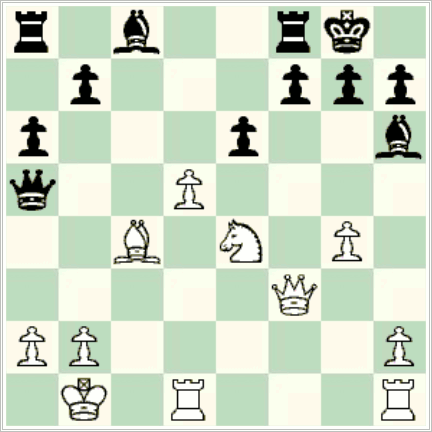
C. Parker Glorney – Imre König
Simultaneous display, Dublin, 31st October 1951
[Source: Dublin Evening Herald, 22nd December 1951, page 4]
“When the distinguished Yugoslav master, Imre König, visited Dublin recently, he gave a simultaneous display at the Rathmines Chess Club, playing 16 games altogether.
The President of the Club, Mr. C.P. Glorney, a very able player, achieved the honour of being the only one to defeat Mr. König and as the following score of the endgame shows he certainly caught his opponent napping.”
[Norman Walker, the editor of the Evening Herald chess column]
1.Bg5 Ne8 2.Nc4 f6? 3.Nxb6 Qd8 4.Nxa8 fxg5
König presumably hoped to follow up with a capture of the Knight on a8 and more or less restore the material balance, but the now open f-file provided Glorney with the opportunity to give his distinguished opponent the choice of allowing checkmate or facing a catastrophic loss of material.