MATCH AGAINST JOHN J. O’HANLON
John James O’Hanlon, as the saying goes, needs no introduction, but the Irish Chess Union website does have this fine tribute from J.J. Walsh.
The Irish Independent reported on Day 1 of the match in its Thursday 7th February 1935 edition.
In the first game of her 5-game match with J.J. O’Hanlon, at the Dublin C.C. yesterday Fraulein Sonja Graf was forced to resign after 41 moves in an extremely interesting battle. O’Hanlon played his favourite opening, the Ruy Lopez, Sonja adopting the Morphy defence.
There was an adjournment at the 21st move in the second game, in which Sonja (white) played the Queen’s Gambit, and Black declining. She played Flohr’s attack and castled on the Queen’s side, which is rather unusual. Neither has the advantage.
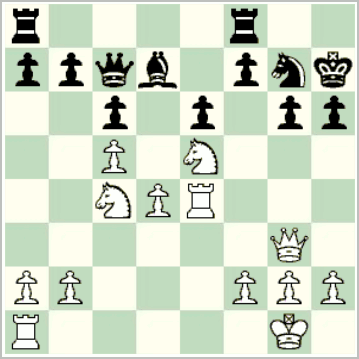
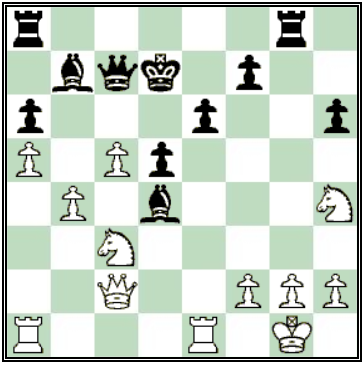
John J. O’Hanlon – Sonja Graf
Match (Game 1) Dublin, 6th February 1935
[Source: Ireland’s Saturday Night, Saturday 9th March 1935, page 4B]
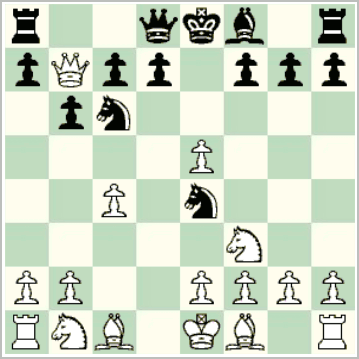
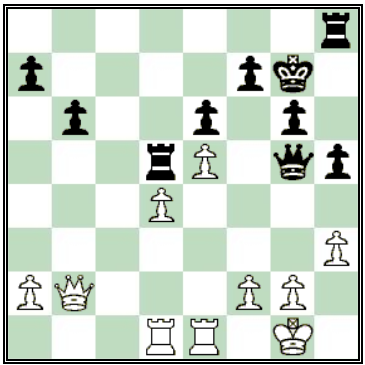
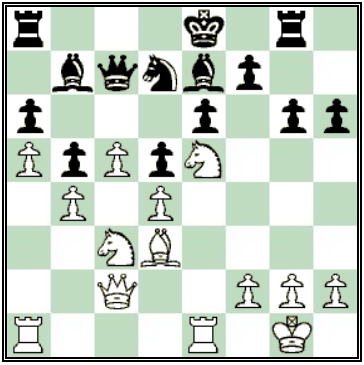
1.e4 e5 2.Nf3 Nc6 3.Bb5 a6 4.Ba4 Nf6 5.0-0 Nxe4 6.d4 b5 7.Bb3 d5 8.dxe5 Be6 9.c3 Be7 10.Nbd2 0-0 11.Qe2
As Fraulein Graf is thoroughly acquainted with all the ramifications of this form of defence to the Lopez, Mr. O’Hanlon played 11.Qe2 instead of 11.Re1 in order to avoid the Breslau variation.
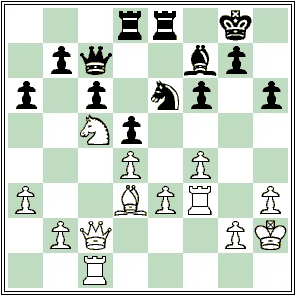
11…Nc5 12.Nd4 Nxb3 13.N2xb3 Nxd4 14.cxd4 Qd7 15.Be3 a5
This move is weak. 15…f6 at once would be better.
16.Rac1 f6! 17.Nc5 Bxc5 18.Rxc5 fxe5 19.Rfc1 Qe7 20.Rxc7 Qh4 21.Qd2 Rf5
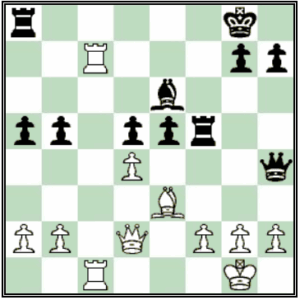
22.dxe5 Rh5
If 22…Rxe5 23.Rxg7+ Kxg7 24.Bd4 etc. [ RR If 24…Qf6 (or 24…Kf6 ) 25.f4]
23.Bf4 Rf8 24.Bg3 Qe4 25.Qc2 Qg4 26.Qc6 d4 27.Qxb5 Qe4 28.R7c5 Rh6 29.Rd1 Qg4 30.Qd3 Rd8 31.Rxa5 Bf5 32.Qf3 Qxf3 33.gxf3 Rb6
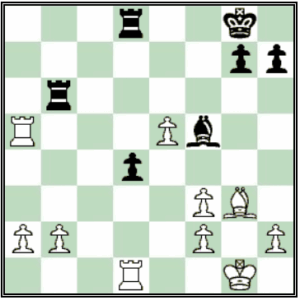
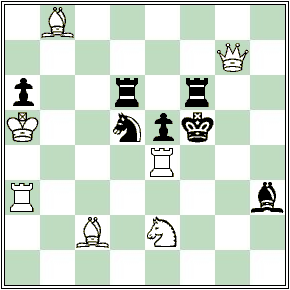
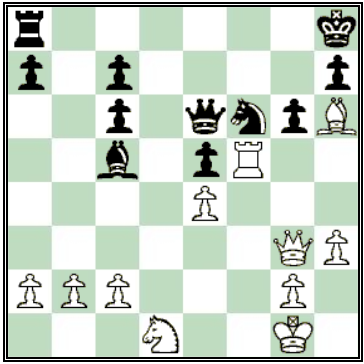
34.e6 Bh3 35.Rh5
Black was probably on the look out for perpetual check. But if 35.Bc7 Rxe6 36.Bxd8 Rg6+ 37.Rg5 was available. The game was lost no matter how Black played.
35…Rxe6
[RR The text gives the ambiguous “35…RxP” so 35…Rxb2 could have been played, but seems less likely given the moves played thereafter.
36.Rxh3 Re2 37.Bf4 d3 38.Bd2 Rf8 39.f4 g5 40.Rxd3 gxf4 41.Bc3 1-0
[Click here to replay the game]
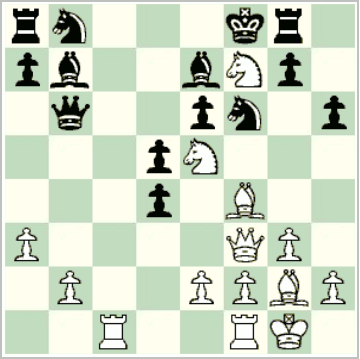
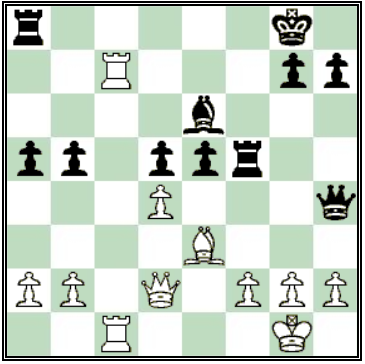
Sonja Graf – John J. O’Hanlon
Match (Game 2) Dublin, 6th & 7th February 1935
[Source: Sports Mail and Dublin Weekly Mail, Saturday 9th February 1935, page 3]
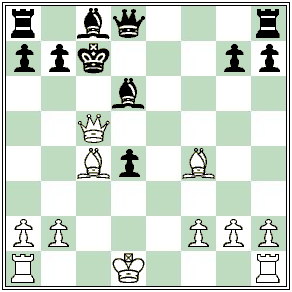
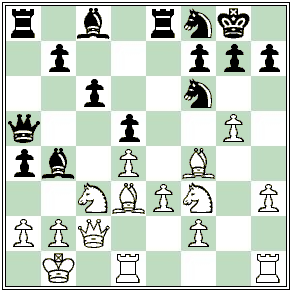
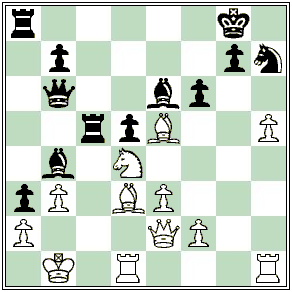
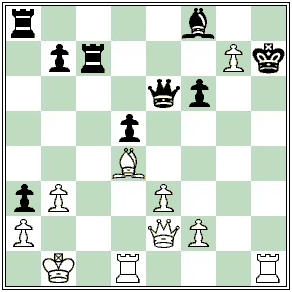
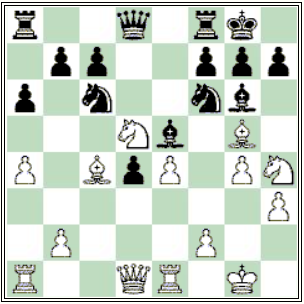
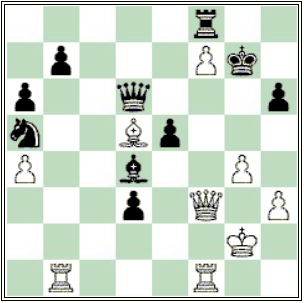
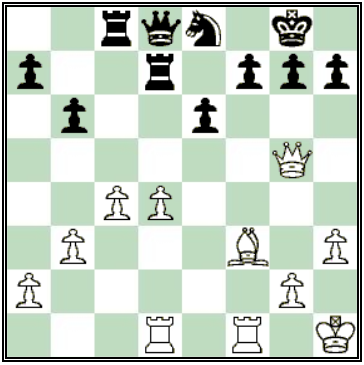
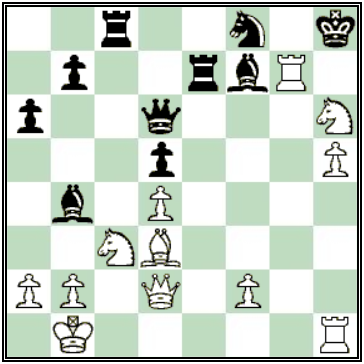
1.d4 d5 2.c4 e6 3.Nf3 Nf6 4.Nc3 Nbd7 5.Bg5 c6 6.cxd5 exd5 7.e3 Be7 8.Bd3 0-0 9.Qc2 Re8 10.0-0-0 Nf8 11.h4 Be6 12.Rdg1 Rc8 13.Bxf6 Bxf6 14.g4 a6 15.Kb1 c5 16.g5 Be7 17.h5 cxd4 18.exd4 Bb4 19.g6 h6 20.gxf7+ Bxf7
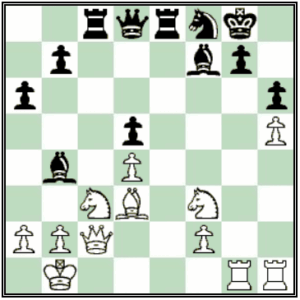
This is probably where the game was adjourned on Day 1 of the match with White’s 21st move sealed, but it is possible that this procedure happened after either player’s 21st move. In any event, considering the Irish Independent’s assessment of the position at adjournment, the game concluded very quickly the next day with a sacrificial flourish from Graf.
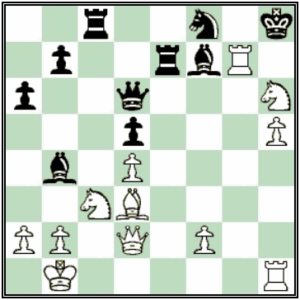
21.Qd2 Qf6 22.Ne5 Re7 23.Ng4 Qd6 24.Nxh6+ Kh8 25.Rxg7 1-0
[Click here to replay the game]
Unfortunately, no game scores of the final three games in the match have been discovered in contemporary sources. However we can give some sense of how those games unfolded from the general overview of them in the local press.
John J. O’Hanlon – Sonja Graf
Match (Game 3) Dublin, 7th & 8th February 1935
The Irish Independent report on Friday 8th February sets out the abrupt finish of Game 2 and the commencement of Game 3.
The second game in the series of five between Sonja Graf and J.J. O’Hanlon was won in brilliant style, at the Dublin C.C. yesterday by the German lady, O’Hanlon resigning at move 25. The third game – a Queen’s Gambit Declined – in which Sonja adopted Tarrasch’s Defence – was then entered on, and play was adjourned till today at 10.30am.
The conclusion of game 3 saw Sonja Graf go ahead for the first time in the match, as reported in the Independent’s Saturday edition.
On the resumption of play in the third game of their match at the Dublin C.C. yesterday, Sonja Graf (black), forced Mr. J.J. O’Hanlon to resign. Playing in truly great style, she obtained a slight advantage —the win of a pawn — and pushed it home In a masterly-played ending.
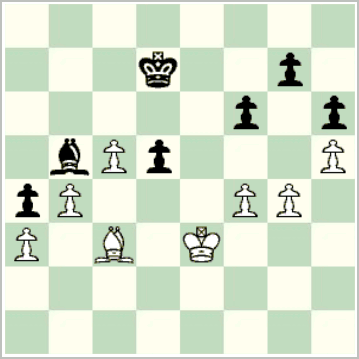
Sonja Graf – John J. O’Hanlon
Match (Game 4) Dublin, 9th and 11th February 1935
This game took place either side of Sunday with play finishing up early enough on the Monday for the Evening Herald to report on the whole game that day
MR. O’HANLON WINS THE FOURTH CAME.
The fourth game in the match between Sonja Graf and Mr O’Hanlon commenced on Saturday forenoon at the Dublin C.C. The game, a Queen’s Gambit (declined), which was later adjourned, was resumed this morning. After a long and stiff contest, Mr. O’Hanlon succeeded in winning a pawn, which enabled him eventually to force a win and equalize the scores at two games each. At certain stages the Fraulein had a certain draw, but sportingly took chances in the hope of forcing a win.
The Sunday Independent on the 10th February had reported in greater detail on the Saturday play – and this report also appeared verbatim in its sister paper on the 12th.
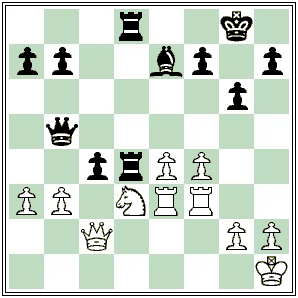
The game in the Sonja Graf — J. J. O’Hanlon match was started at the Dublin C.C. on Saturday. Sonja (white) opened with the Queen’s Gambit, which was, as usual, declined. The opening was carried out on orthodox lines with the advantage going neither way. When the time for adjournment came the material and position were equal, but if it comes to an end-game with the major pieces off Mr. O’Hanlon will probably stand tbc better chance, as he has two bishops against bishop and knight.
Following immediately below that report in the weekday Independent, was a report on the Monday play of Game 4.
Fraulein Sonja Graf, the German lady champion, lost the 4th game of her match with J.J. O’Hanlon yesterday morning. It should have been a draw, but both players made errors near the end, being pressed for time, and Mr. O’Hanlon jumped at his chance when Sonja had missed a beautiful win.
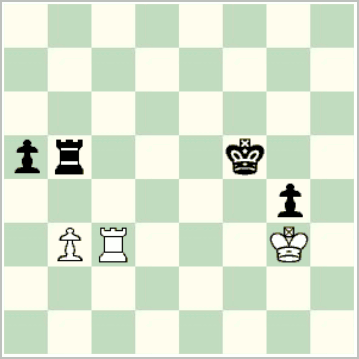
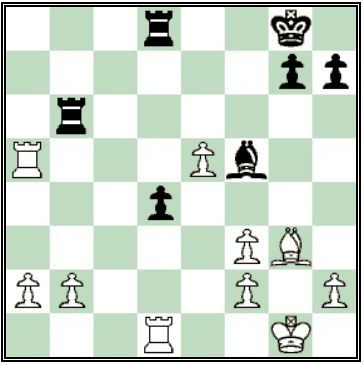
John J. O’Hanlon – Sonja Graf
Match (Game 5) Dublin, 11th & 15 February 1935
The Irish Independent report on the Monday play also carried news of the start of Game 5 and some news on Graf’s schedule for the rest of the week.
The fifth, and last, game in this match was started in the evening. O’Hanlon (white) won a pawn in the middle game as a result of correct positional play in the opening – a Ruy Lopez – to which Sonja replied with the old variation of the Berlin Defence.
At the adjournment both parties had their Rooks and one Bishop left; but Mr. O’Hanlon has five pawns to four. However, the position appears to be a draw on its merits. The score at present stands 2 games all, the result of the match depending upon the final issue of the game in progress.
….
Fraulein Graf will pay a visit to Cork tomorrow [Wednesday] returning to Dublin on Thursday. On Thursday and Friday she will play at the Dublin C.C.
REST DAY
The Irish Independent reported on Wednesday 13th February 1935 that there had been a pause on Sonja’s chess activities.
Fraulein Sonja Graf took a well-earned rest yesterday. She was wise to do so, as continuous play during the last nine days must have been a great strain on her. Tomorrow she goes to Cork to fulfil an engagement with the clubs there.
Sonja will resume the deciding came in her match with J.J. O’Hanlon on Friday, and also hopes to have enough time to play a three-game match with that very strong Dublin C.C. player, A.P. Watkinson, before leaving for England next Saturday.
MATCH -v- A. PANTON WATKINSON
Arthur Panton Watkinson was born in England, but he is recorded as resident in Dublin in both the 1901 and 1911 Census, and continued to live in Ireland thereafter. In the 1901 Census Form, where his age seems to have been incorrectly given as 29, he appears as a boarder in the household of a Mr and Mrs Farrell of 262 Kenilworth Square, Rathmines.
On the 12th March 1902 he married Katie Hollingsworth (the Marriage Certificate names him as Arthur Watkinson) and the 1911 Census finds them living at 1 Healthfield Road, Terenure. They have a two year-old daughter Eve, who later became a distinguished actress. The Census Form details for A.P.W. include him being aged 35 and that his occupation is “Decorating and Building Contractor.”
Although his almost universal use of “A. Panton Watkinson” tends to give the impression of a double-barrelled surname, the Census forms make it clear that Panton is a forename, He died on the 12th April 1960 aged 81.
Sonja Graf – A. Panton Watkinson
Match (Game 1) Dublin, ? February 1935
No contemporary reporting has been found as to when the first game in the Graf -v- Watkinson match was played. Originally, it may have been intended to start the Watkinson match only after play in the O’Hanlon one had been completed, but with the fifth, and final, game against O’Hanlon adjourned to Friday and Graf leaving for England on the Saturday, scheduling the Watkinson match now was looking a little tricky.
Two possibilities seem the most likely for the date of Game 1. First, despite having taken Tuesday 13th February off, Graf may nonetheless have decided to pay a visit in the evening to the Dublin Chess Club. Watkinson was a member of the club – Sonja may have found him there and that then led to an impromptu start to the match. The second possibility is that game one was arranged for the morning of Wednesday 13th February before Sonja set off for her visit to Cork.
The one important piece of information we can confirm from the reports on the rest of the match is that Graf won that first game.
The Irish Press for Friday 15th February reported on Sonja’s return from Cork and her usual frenetic schedule.
DUBLIN CHESS
IMMEDIATELY on arriving from Cork last evening Fraulein Sonja Graf, the German lady champion, proceeded to the Dublin Chess Club to start the second game in the series of three with Mr. A. Panton Watkinson [of Dublin C.C.].
This concluded with the 15th move when Mr. Watkinson (playing white) resigned to give the visitor her second victory and the match. In the third game an adjournment was called on the 25th move.
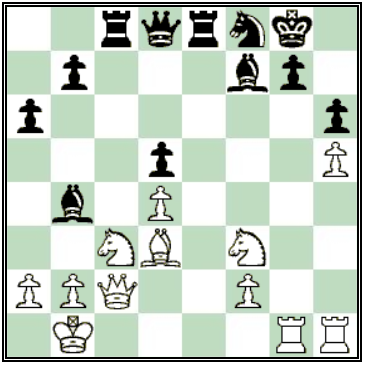
Arthur Panton Watkinson – Sonja Graf
Match (Game 2) Dublin, 14th February 1935
“This bright specimen of Fraulein Graf’s style has come along. Mr Watkinson, although he has not been figuring in matches of latter years, is still looked upon as one of the Dublin Chess Club’s strongest players. The game was one of three played by him in a match with Sonja.” (Evening Herald, 2nd March 1935, page 8)
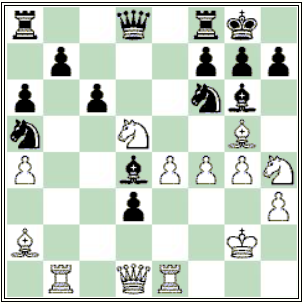
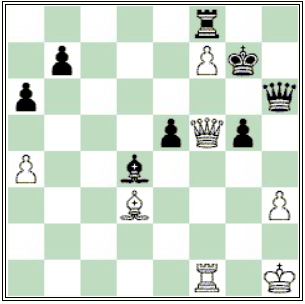
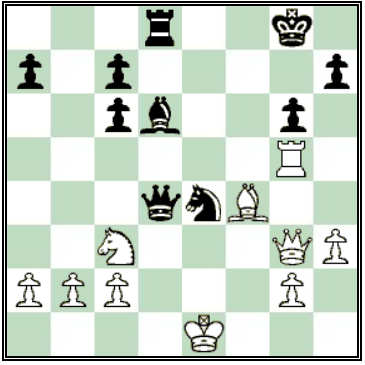
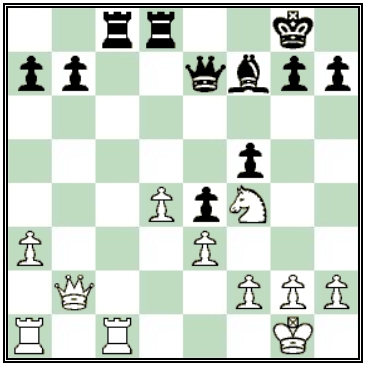
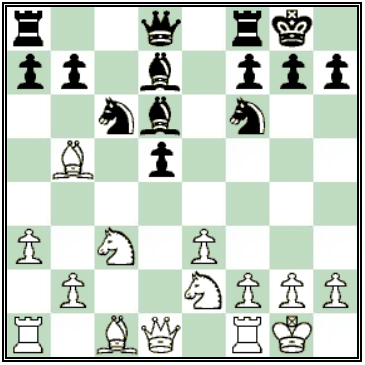
1.d4 d5 2.c4 e6 3.Nf3 c5 4.cxd5 exd5 5.Nc3 Nc6 6.e3 Nf6 7.Bb5 Be7 8.dxc5 Bxc5 9.Nd4 Bd7 10.a3 0-0 11.0-0 Bd6 12.Nde2
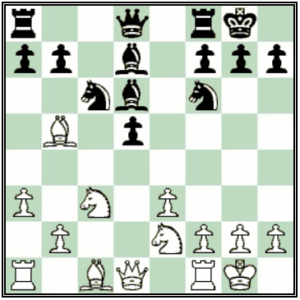
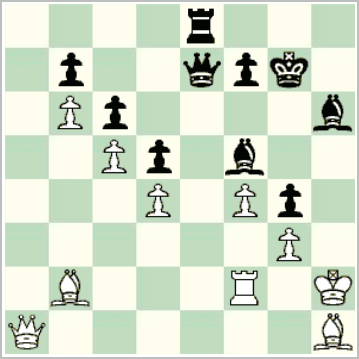
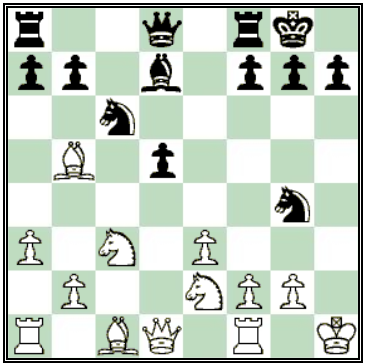
12…Bxh2+ 13.Kxh2 Ng4+ 14.Kh1
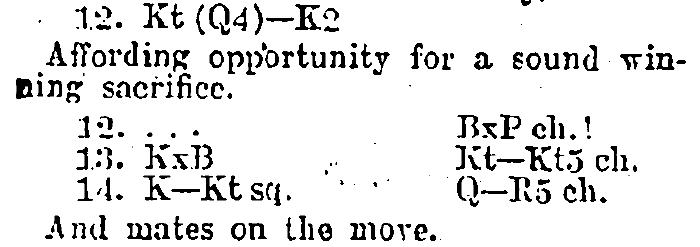
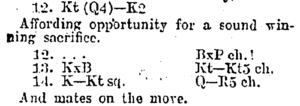
Here the source confusingly gives “14. K-Kt sq Q-R5 ch. And mates on the move.” So did White play 14. Kh1 or 14.Kg1?
 If White had played 14.Kg1 then there would be no immediate mate after 14…Qh4 because of 15.Re1 but after 15…Qh2+ 16.Kf1 Qh1+ 17.Ng1 Nh2+ 18.Ke2 Bg4+ Black would have an overwhelming attack.
Looking at the other two responses to 13…Ng4+:
1. If White goes 14.Kh3, Black wins the opposition Queen after 14…Nxf2+ (or 14…Nxe3+ which also allows for the possibility of a quick checkmate, if White chooses 15.Kg3, with Qg5+ 16.Kf3 (or 16.Kh2 Qxg2 ) .
2, However 14.Kg3 gives White a chance of surviving. After 14…Qg5 (threatening 15…Ne3+ and Qxg2 mate) 15.f4 Qg6 16.Bd3 f5 17.Kf3 although Black has a strong attack, there is no clear win immediately in sight.]
Now going back to the position after 14,Kh1.
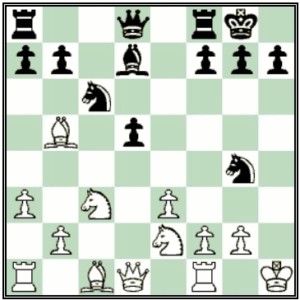
14…Qh4+ 0-1
and, of course, it is checkmate “on the move” after 15. Kg1 Qh2.
[Click here to replay the game]
Sonja Graf – A. Panton Watkinson
Match (Game 3) Dublin Chess Club, 14th and 15th February 1935
As appears above in the Irish Press report, this game was commenced on the 14th February and then had to be adjourned to the following day at Dublin CC, where it would join in with the already scheduled adjournment session of the final game in the O’Hanlon match.
ADJOURNMENT SESSION DOUBLE-HEADER
Play in the adjournment session ended sufficiently early on Friday 15th February 1935 that the Evening Herald was able to report the conclusion of both the O’Hanlon and Watkinson matches on the day.
FRAULEIN SONJA GRAF.
The young German champion, who returns to London to-morrow, completed a heavy programme this morning at the Dublin Club. In the challenge 5 game match with Mr. O’Hanlon, with the score standing at two games each, the final game, which was adjourned on [Monday], was resumed at 10.30 and finally ended in a draw, the match accordingly resulting in a tie at 2½ points each
Immediately on the conclusion of this match Sonja Graf faced Mr. A. Panton Watkinson, who had challenged her to a 3 game match. Already having won the first two games, the Fraulein continued the third game, which was adjourned from the previous evening, and which she eventually won.
Mr. Watkinson , who has not played any serious chess for some time, very sportingly issued this challenge, although with little hopes of success. He experienced hard luck in the third game in missing a winning line.
The following day’s report in the Irish Independent provided some further detail and in particular its reporter’s assessment of how close Sonja had come to losing both games.
Against [O’Hanlon], she obtained a draw … at the 40th move, after Mr. O’Hanlon had lost a winning chance a move earlier.
Fraulein Graf won against Mr. Watkinson, as he resigned at the 32nd move, after he had missed a certain win half-a-dozen moves earlier.
The Irish Press had a different take on the the conclusion of the two matches and provided a very positive evaluation of the German champion’s visit to Ireland.
A SUCCESSFUL TOUR
FRAULEIN SONJA FRAF, the German lady champion, after a most successful tour of various Irish chess-playing centres, has departed for London.
Yesterday she entered upon the final stage of the fifth and last game of the match with Mr. J.J. O’Hanlon. The result of this was a draw, to leave the main issue all square at 2½ each.
The lady also found time to complete the last game of the three in her match with A. Panton Watkinson. With two wins to her credit, she proceeded by playing great chess to complete the treble.
                1  2  3  4  5  TOTAL
SONJA GRAF      0  1  1  0  ½    2½
J.J. O'HANLON   1  0  0  1  ½    2½


                1  2  3  TOTAL
SONJA GRAF      1  1  1    3
A.P. WATKINSON  0  0  0    0