Wexford June Congress 1974

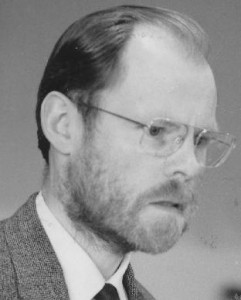
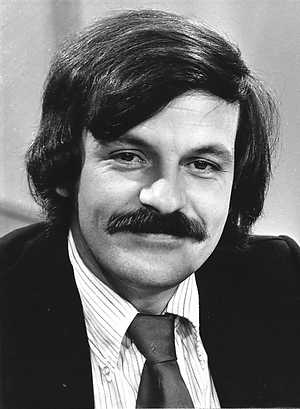
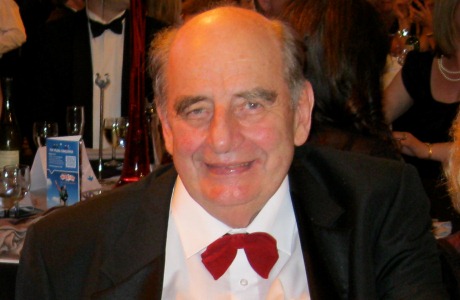
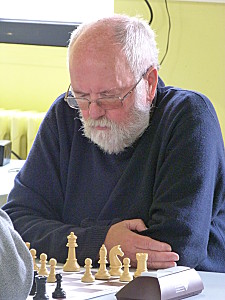
Bernard Cafferty (date unknown; from BCM archive)As mentioned previously, there appear to be very few games available from the Wexford/Drogheda June Congresses. If any reader has any they can send in, please do so! The only games I’m aware of are the five games of Bernard Cafferty (pictured left), from the 1974 event, the 4th in the overall series and two years after the photo in the last post. They’re taken from a collection of 1,403 of his games on John Saunders’ site BritBase (British chess games archive).

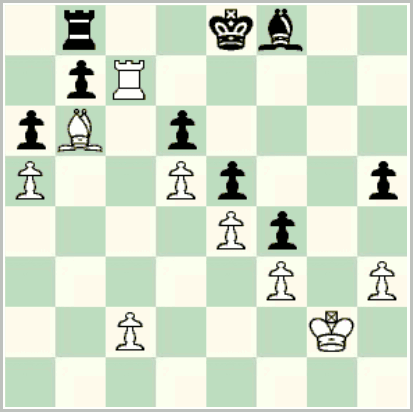
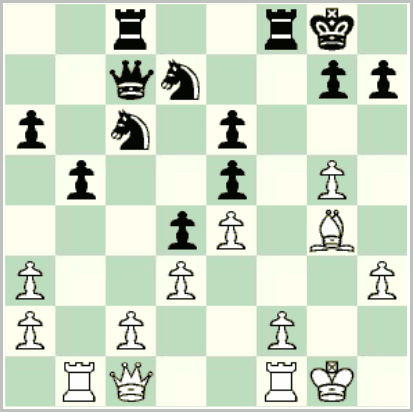
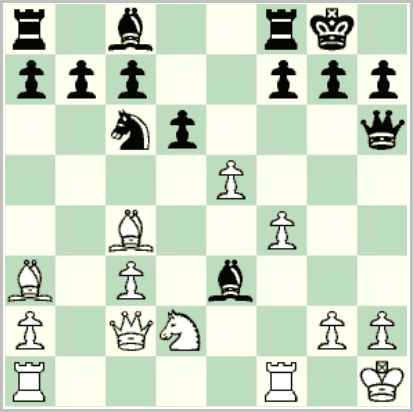
In the first round he faced a very young (not quite 15) Paul Wallace, and as White reached the diagrammed position. It looks overwhelming but how does White break through?

Cafferty-Wallace-1974Cafferty tried 36. Ba7 Rd8 37. Rxb7 Rc8 38. Rb8 but after 38. … Rxb8 39. Bxb8 there was no way through and after a further 27 moves Cafferty was forced to conceded the draw. Also bad is 36. Rh7? Rc8, so he had to try something like 36. c4 followed by bringing the king over to the Q-side, when he must be winning. [Click to play through the full game.]

Final scores: 1. Bernard Cafferty 3½/5; 2. S. Galligan 3; 3.-4. Joe Noone, P. O’Briain 2½; 5. Paul Wallace 2; 6. Michael O’Briain 1½. (Note that the last two appear in the photo of the 1972 event.)

I see from the report on this year’s event on the Drogheda C.C. web site that Paul Wallace played yet again this year, finishing second on 3½/5. Per the records on David McAlister’s Irish Chess History site, he played six times in Wexford and another three times in Drogheda, finishing first in 1977 and 1999, and equal first last year.

Posted in Drogheda Congresses, Games, Tournaments, Wexford Congresses | Leave a comment

Wexford/Drogheda June Congress

The Drogheda June Congress is on this weekend. This competition has a unique structure of 6-player all-play-alls and a long history: this is the 24th of the series in Drogheda, in an unbroken sequence from 1990, and it had previously run from 1971 to 1988 in Wexford while the organiser Andrew Thomson lived there.

David McAlister has compiled lists of winners down the years on his Irish Chess History web site: see the Drogheda and Wexford web pages. Unfortunately very few games are available: I have five from the 1974 event that I’ll upload soon.

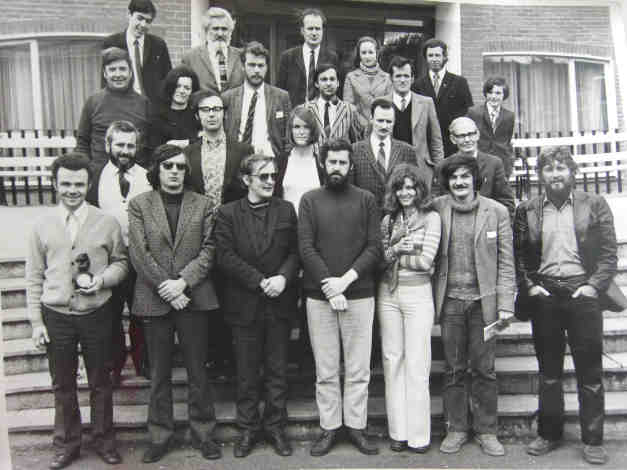
In the meantime here’s a photo from the 1972 event, just the second in the series. This is from the Drogheda C.C. web site (“History of the June Congress“, 7 July 2011): see the comments there for discussion of who everyone is. I must admit I had exactly the same first impression as Seán Terry: the moustached fellow second from right in the front row is exactly how I remember Paul Wallace; but apparently it’s not him?

wexford-1972-june-congress-sm

Can anyone help with the remaining identifications?

Update, June 5, 2013: David McAlister provides significant new information (see the comments). With this, it seems we can update the identifications (new information in bold):

Front row: Mick Keeshan, Michael Littleton, Art Coldrick, Maurice Kennefick, unknown, Alexander Münninghoff (Netherlands), (T.? or Alar?) Alan Puhm (Canada).

Second row: Gerry Murtagh, Brendan Ryan, Dorren O’Siochru, Andrew Thomson, Bill Ross.

Third row: Peter Kelly, Aileen Noonan, Jim Hackett or A. Johnston (Dublin), Hussain Baher, A. Johnston (Dublin) or Jim Hackett, Paul Wallace.

Back row: Michael O’Briain, Richard Dale, TBA Seán O’Donnell, Elaine Foley, Tony O’Byrne.

(Update, June 18, 2013: Tony Bent fills in another piece of the puzzle (see comments) by identifying Seán O’Donnell of Portlaw, Co. Waterford. (Added to the list above.))

(Update, September 21, 2013: Dan Scoones adds a correction (see comments): it’s Alan Puhm.)

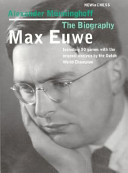
Here’s the cover of the Euwe biography (later, translated version), and the 1977 photo of Alexander Münninghoff (see David’s comment). I’m convinced!

Euwe_Munninghoff_coverA Munninghoff photo

Posted in Drogheda Congresses, Photos, Wexford Congresses | 7 Comments

Denis Irwin

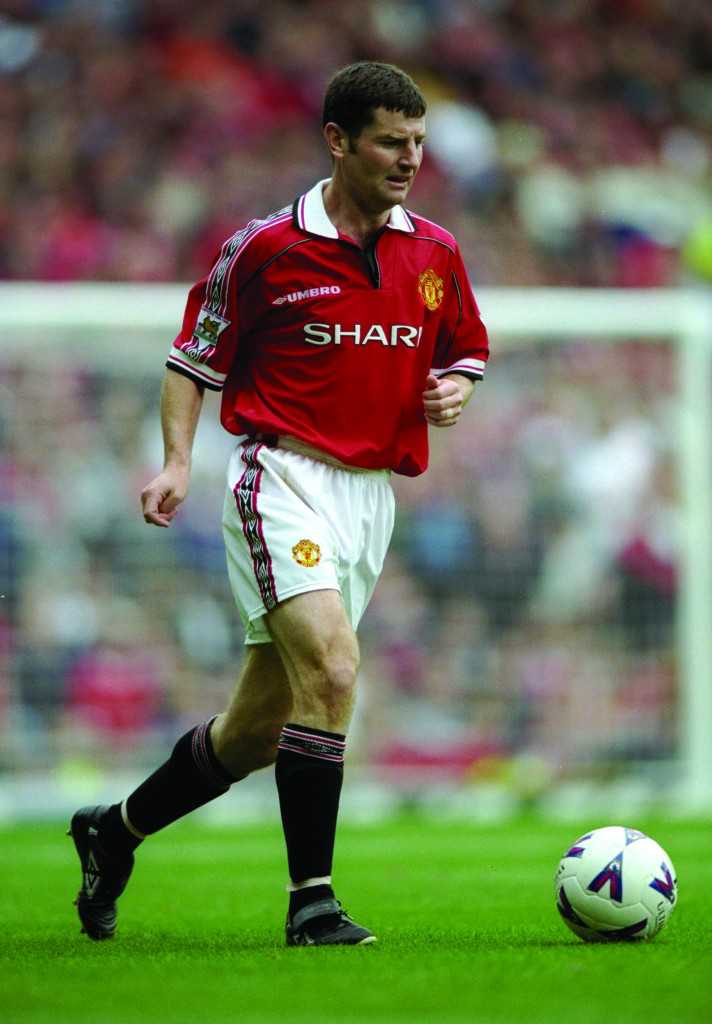
Denis IrwinAround ten years ago, Denis Irwin gave an extensive interview to RTÉ as he was about to leave Manchester United after a glittering career there (1 European Cup, 7 Premier League titles and 3 FA Cups, among others), while also being a fixture of the Republic of Ireland team (56 caps).

At one point the topic came up of other games he had played, and he mentioned that he had played chess growing up, for Togher, and in 1978 the team won the Cork and Munster Community Games championships, and made it to Mosney for the national finals.

This account comes from my old team-mate Owen O’Mahony, who was watching the interview, and who immediately said to himself “1978? Community Games?? Togher???” and went and checked his old scorebooks. For believe it or not both Owen and I played Community Games also, and after several years of trying in a very tough Dublin competition, we finally made the breakthrough in 1978, so we were also at those same national finals. And when he checked, there it was: Irwin-O’Mahony, Togher v. St. Laurence’s, Community Games semi-final, board 2, played on September 3, 1978.

Irwin-O'Mahony, Community Games 1978It would be too much to expect a classic, and indeed the game hit a very strange passage from both players from moves 6-8. Irwin, then 12 years old, emerged a piece down with no prospects of complicating. How would you proceed, against a player rated 16-1700 or so? In the sequel he put up about as decent a struggle as could be expected. [Click to play through the full game.]

We won that match 3½-1½ and beat Castlebar in the final, though barely, requiring an adjudication to clinch it. The team: Seán Coffey, Owen O’Mahony, Brendan Lyons, Dermot Kennan, David Lanigan.

These Community Games competitions were enormously enjoyable, more so than any other chess competition I’ve played in. The chess was of variable quality but often highly dramatic, games didn’t take too long, and of course at those ages the joy of winning and the sting of defeat are felt much more keenly. I’m delighted to see from Rory Quinn’s blog that the competition is still going strong. Congratulations to Shannon, this year’s champions!

Posted in Games | 8 Comments

Black to play and win

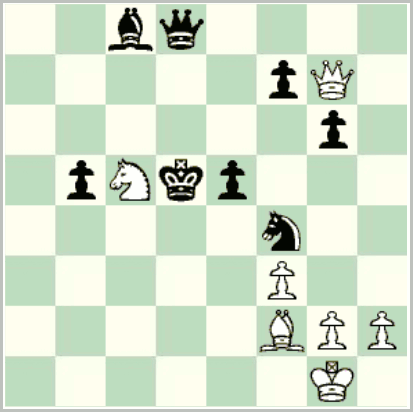
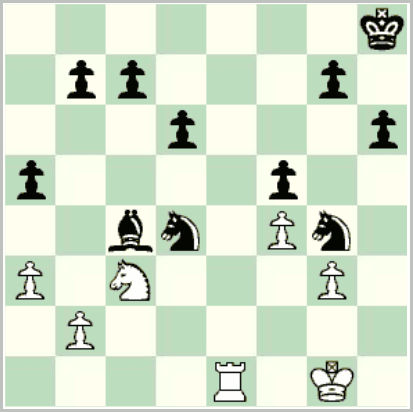
Ryan-Rafiee, XV Foment Martinec 2013As the title says: Black to play and win.

(N.B. If you’d like to try it as an exercise, don’t read any further for now: the answer is given below.)

This is from a game of Joe Ryan’s (White), played on Saturday in an IM-norm tournament in Barcelona. There seem to be quite a few such events being organised in Barcelona these days and Joe is ideally placed for invitations, as a non-Spanish player with an FM title. The present event, XV Foment Martinec, is another 10-player, game-a-week all-play-all, with (I think) 6½/9 required for an IM norm in Joe’s case.

Going into this game he was on 2½/5, requiring wins in his last four games, quite a long shot. The game itself is an interesting one with many twists and turns, and is well worth playing over. It seems Joe built up a winning attack but misplayed it around the time control, and in the diagrammed position (reached shortly after the time control) was lost. Black has 43. … Kc4! 44. Qxe5 (there’s obviously nothing else) 44. … Qd1+ 45. Be1 Nd5! and the white knight has nowhere to go. Black missed the chance with 43. … Qg5? and after another error ended up losing. So the norm is still possible, though still a long shot. [Click to replay the full game.]

Posted in Games, Puzzles | Leave a comment

Zukertort-Soffe, blindfold simul 1879

Last week saw a welcome return of John Watson’s series of book reviews at The Week in Chess, after an extended break. And the very first book up for review is none other than Tim Harding’s Eminent Victorian Chess Players, mentioned here previously and listed on the Bibliography page.

And an excellent review it is too! This is particularly notable as in the past Watson hasn’t been a particular fan of chess history, but he liked this one: “surely this is one of the best and most accessible pieces of chess history ever written.”

Zukertort-Soffe, blindfold simul 1879One of the ten masters considered is Zukertort, whose visit to Ireland in 1879 was previously the subject of some of Tim’s research: see for example the Zukertort pages at ChessMail.com. He gave two major blindfold simuls. In the second, in Earlsfort Terrace ice skating rink on 7th March 1879, he reached the position at right against George Soffe, later Irish champion from 1889 to 1892 (based on his win in the 1889 championship), after Soffe’s 14. … Be3.

Zukertort went wrong with 15. g3?, and after 15. … Bh3 16. Rf3 Bxd2 17. Qxd2 Nxe5 was already lost. [Click to replay the full game.]

Easy enough to miss when you’re playing ten blindfold games simultaneously, of course. After the much better 15. exd6 Black’s better but White’s still very much in the game. Monck gave this as one improvement in his column in Our School Times, 10 May 1879, but his follow-up analysis leaves something to be desired: 15. … Bxf4 16. dxc7 Bxd2 17. Bxf8 Kxf8 18. Rxf7+ Ke8 19. Qe4+ and White wins. But what’s wrong with 16. … Qxh2 mate.? White must try 16. Rxf4 instead, when he’s doing relatively well, so Black is better advised to recapture with 15. … cxd6 instead.

Posted in Games, Simuls | Leave a comment

The New Winawer Report, issue 5

tNWR issue 5The fifth issue of The New Winawer Report has been posted: see the tnwr page. This issue continues with the much-maligned, but much-better-than-its-reputation, 13. Be3.

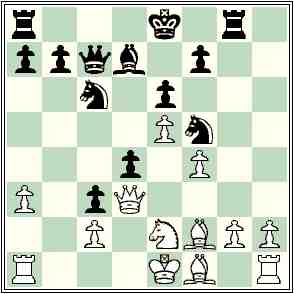
Black has a few viable options, but one of the main lines reaches the diagram at right, where White’s Be3-f2 has had the effect of inducing the committal … Nf5 and … d4. White may now proceed with either 15. h3 or 15. Rg1, planning in each case to follow up with g4. Although Black has an effective counter, this is overestimated by theory: Black has a narrow path to equality, but no more than that. Or so it seems to me: see the issue for full details.

Possibly the most important game featuring 13. Be3 was Spassky-Korchnoi, Candidates Final (2), 1977. In response Korchnoi sprung the surprise 13. … d4!?, a novelty, and won in great style. Much ink has been spilled on that, but I’ve never seen a persuasive answer to another question: what did Spassky have in mind, assuming Korchnoi continued with the usual 13. … Nf5 or 13. … 0-0-0, since 13. Be3 had had a dismal reputation for fifteen years or more by that point? I’ve seen the suggestions 13. … Nf5 14. Bf2 d4 (reaching the diagram above) 15. g4?! (Hartston in BCM, shortly after the match) or here 15. Ng3 0-0-0 16. Ne4 (a losing blunder!) in Archives, late ’80’s, but don’t find either very believable. Did Spassky ever say?

Anyway, the nest issue is tentatively planned to switch to the line 13. h3!?, with the plan of an immediate g4 (cutting out the Be3-f2 middleman). This was introduced by the late Robert Byrne in a famous game against Uhlmann in Monte Carlo 1968, and is a much more respectable try for White, especially as Uhlmann’s solution no longer seems to hold up theoretically.

Posted in Articles | Leave a comment

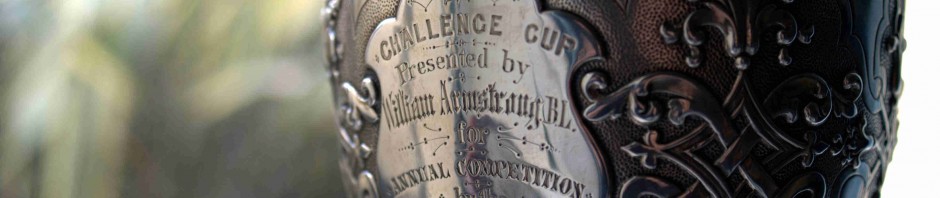
“Here’s one that wasn’t so good”: Alekhine-Barry, Dublin 1938

The Simuls page has a list of the illustrious visitors to Ireland down the years: these include Steinitz, Capablanca, Alekhine, Euwe, Smyslov, and Topalov, all world champions at one time or other. But only one of these was the reigning world champion during the visit. Alekhine gave three simuls in September 1938: in Dublin (Regent House, Trinity) on the 14th and 15h, and Belfast (Clarence Place) on the 17th.

The results were +31 =3 -1 and +28 =7 -0, respectively, in Dublin, and a clean +34 =0 -0 sweep in Belfast. Thus he lost only one game, versus Charles J. Barry (Sackville). Barry won the Leinster championship seven times, including the first three championships in 1912-14, as well as at least two Armstrong cups with Sackville (probably many more). He was never Irish champion: the closest he got was =2nd in 1940, ½ point behind O’Hanlon.

Alekhine-Barry, First simul, Dublin 1938It seems only two games from the entire visit survived (neither one in the ICU games archive, surprisingly), of which the only complete one is Barry’s win. Alekhine blundered in the opening (16. Bg8?) and it all went downhill from there. From the diagram the finish was 29. Re7 Ne6 30. Rf7? Nf6 31. Re7 Kg8 0-1.

[Click to replay the full game.]

There’s more to the story: at the end of the game, Barry asked Alekhine to sign his scoresheet, but Alekhine waved him away angrily and refused. Barry can’t have liked that, but what can you do? When “My Best Games of Chess 1924-1937” came out, Barry pasted the scoresheet onto the inside front cover and wrote across the top “Here’s one that wasn’t so good.” (Source: J.J. Walsh.)

Posted in Games, Simuls | Leave a comment

From Cork 2013

TWIC 963 had 23 games from the Cork Masters 2013, now all posted in the games archive.

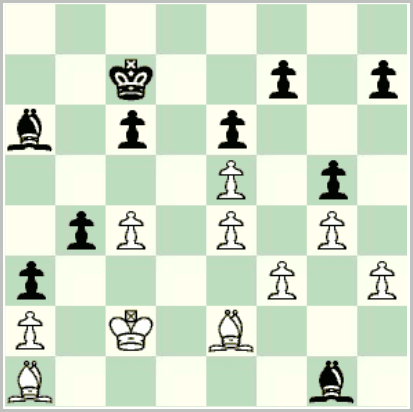
Doyle-Baburin, Cork Masters 2013In the second round, local player and newly minted Irish U-19 champion Hugh Doyle was up against Alexander Baburin, and reached the following position, as White, to play. He went wrong with 31. Kd3? Kb6 32. Bd4+? and lost quickly after 32. … Bxd4 33. Kxd4 c5+ 34. Kd3 b3! 0-1.

In retrospect he probably wished he had tried 31. Kb3!? from the diagrammed position, with a view to blocking the entire position and preventing Black from infiltrating. What is your evaluation of the resulting position?

Answer (or at least my answer) in a few days.

Posted in Games, Puzzles | 1 Comment

Alex Montwill

Alex MontwillJ.J. Walsh has sent the news that Alex Montwill, who has been mentioned here several times, died two weeks ago, on April 18th. He was 78.

As previously discussed here, he finished equal first in an Irish championship but was never Irish champion, losing out on tie-break in the 1962 championship in Derry (8-round Swiss, 16 players, finishing =1st-4thon 5½/8 with John B. Reid, Michael Littleton, and Brian Reilly; Reid and Littleton were declared joint Irish champions on tie-break). However he had the consolation of being (joint) Irish correspondence champion in 1963. He also played on two winning interprovincial Leinster teams in 1961 and 1964, on boards 11 and 5 respectively in the finals. He gave up chess relatively early and switched instead to bridge (as did so many other Irish players over the years), where he was apparently a very strong player.

He was most prominent (and apparently very well known) as a physicist, and was a Professor of Experimental Physics at UCD, where he worked in one capacity or another for over 40 years.

In a 43-minute interview from an Institute of Physics Ireland event in 2010, he gives many interesting details of his background. He was born in Riga, Latvia around 1935, and recalled the family hiding from invading Soviet troops during the war, moving around in Lithuania and Poland for a few years and ending in Germany. He moved to Ireland in 1947; apparently not just any refugee could do so at the time, and some connection to Ireland was required. In his case, one of his ancestors, an O’Rourke, was one of the Wild Geese, and a branch of the family, all O’Rourke’s, ended up over the centuries working for the Tsars.

A brief biographical summary has been added to the main players page. A more detailed page will be added at some point. The ICU games archive has just two of his games; does anyone know of any others?

Posted in News, Players | 1 Comment

The New Winawer Report, issue 4

The fourth issue of The New Winawer Report has been posted: see the tnwr page. This one continues with the main line of the poisoned pawn variation. A game from this year’s Gibraltar Masters, Janev-Quillan, featured 13. Be3. This was for a brief time one of the main recommended variations for White, but has been under a cloud for decades. But in Janev-Quillan, White got an excellent position from the opening, and duly won.

What went wrong for Black? Issue 4 considers the point, along with some of the theory of the 13. Be3 variation.

Posted in Articles | Leave a comment